

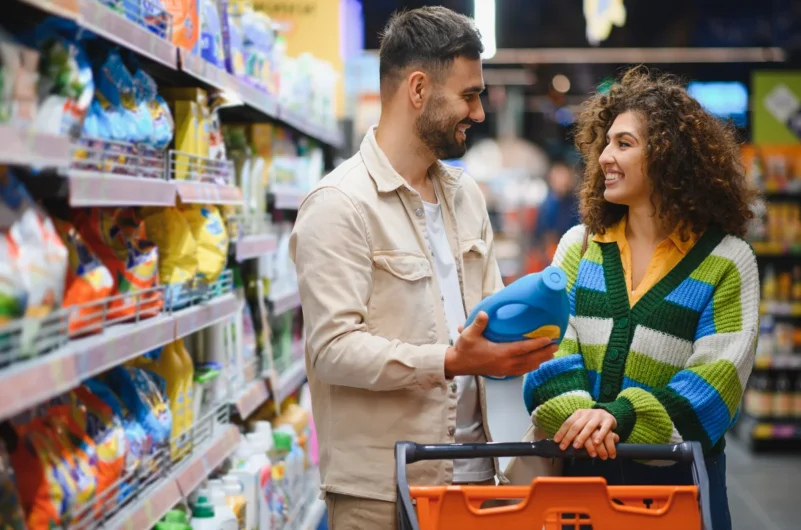
Fast-moving consumer brands increasingly find that global toolkits don’t translate directly into effective localised FMCG market strategies. To compete, teams need disciplined ways to adapt campaigns, packs, and promotions for specific retail environments and shopper realities. This article explains how to turn consumer behavior insights into practical country-specific retail playbooks that protect global consistency while driving local results.
How FMCG Localization reshapes performance
FMCG Localization is more than translation; it’s a structured approach to aligning product, pricing, and creative with real purchasing contexts. When shopper missions differ between warehouse clubs, neighbourhood stores, and quick-commerce apps, a single global market adaptation usually underperforms. Brands that treat adaptation as an operating model, not a last-minute edit, generally see steadier promo ROI and fewer costly relaunches.
From insight to execution on shelf and screen
Effective regional marketing strategies start with data that explains when, where, and how people buy. That means going beyond brand trackers to integrate retailer POS, panel data, and local shopper insight research. The goal isn’t a giant slide deck; it’s a shortlist of execution changes such as flavour rotations, pack-count variation, or promotional mechanics that match pay cycles and storage constraints.
Well-structured local adaptation begins where research ends: with clear rules about what can flex, what stays fixed, and how quickly markets can test and learn without fragmenting the brand.
In practice, cross-border consumer behaviour trends rarely justify identical executions. Single-serve packs may win in dense urban areas with daily top-up shopping, while larger formats perform better where weekly trolley shops dominate. Regionally tailored brand messaging should acknowledge real constraints, like refrigeration access or recycling systems, instead of relying on high-level psychographics.
Working with retailer realities and digital shelves
Strong concepts fail quickly when they collide with retailer constraints. Many chains have rigid planogram windows, banned phrases, and image hierarchy rules that limit last-minute creativity. Local trade teams need market entry adaptation tactics aligned with buyers’ expectations, from promotional cadence to acceptable discount depth. Without that, the best-designed POS simply never leaves the printer.
Digital execution adds another layer of complexity. Search terms, image ratios, and copy length differ across retailers and marketplaces, forcing data-driven local marketing decisions rather than one master asset set. It’s common for multinational teams to discover that their global templates truncate key claims on mobile PDPs. A practical fix is a lean library of country-specific retail playbooks that document retailer UI constraints and approval timelines.
Governance, workflows, and realistic constraints
Governance is usually where localisation breaks down. If everything requires global sign-off, speed disappears; if nothing has guardrails, brands fragment. A workable model defines which claims, brand assets, and layout principles are non-negotiable, and which can flex by channel or region. Regionally tailored brand messaging should be pre-approved in concept so markets aren’t rewriting from scratch under launch pressure.
Misalignment often shows up as inconsistent terminology between packaging, TV, and ecommerce copy, or slogans that read awkwardly after direct translation. Culture-specific product positioning takes longer to get right than new colourways, and legal review cycles are frequently underestimated. Teams should budget time for claim substantiation, nutrition regulations, and retailer-specific QA, particularly when operating under tight promotional windows.
For leaders building repeatable FMCG playbooks, the key questions are operational: can your process support multiple variants without quality drift, and do your workflows allow quick iteration when consumer behavior insights shift? If you’d benefit from a more structured approach to FMCG Localization, consider speaking with a specialist team to review your current toolkits, approval paths, and retailer demands before the next major campaign cycle.