

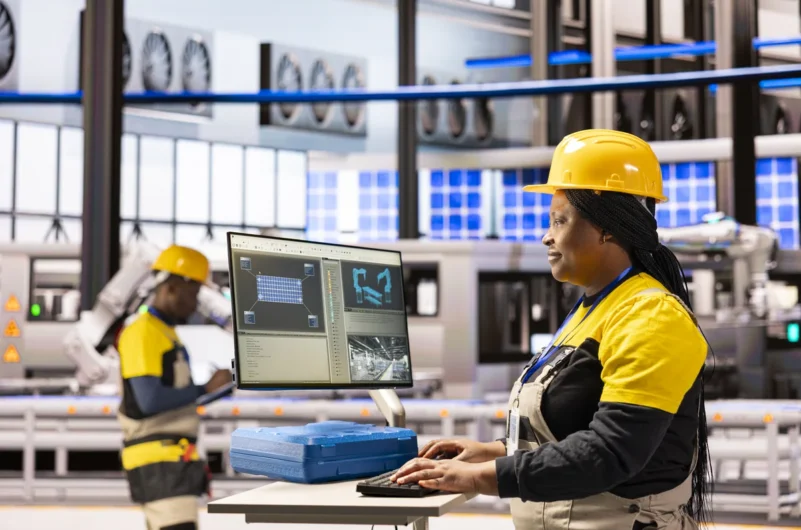
Global Manufacturing Teams: The Importance of Clear Communication
For global manufacturers, trust between headquarters and distributed plants depends on whether instructions are followed exactly as intended. That trust breaks quickly when line operators in Mexico, Vietnam, or Poland interpret the same procedure three different ways. Clear policies around Manufacturing Translation, technical reviews, and controlled document release give your teams confidence that the information they’re using is accurate, current, and safe to follow on the shop floor.
When every shift, in every plant, can rely on the same unambiguous instructions, quality stops depending on who happens to be on duty that day.
Why communication standards define global manufacturing success
Operations leaders rarely lose sleep over perfectly translated brochures, but they do worry about misread torque specs and bypassed lockout steps. That’s why mature organisations treat technical document translation as a core quality process, not an afterthought. Standard workflows define who owns the source content, how changes are controlled, and how multilingual manufacturing support is triggered whenever a procedure, work instruction, or control plan is updated.
Clear standards only build trust if people can see they’re actually followed. Plants gain confidence when revisions arrive through the same channel every time, with version IDs that match the MES or DMS, and with change rationales that make sense to engineers and technicians. When operators know that every translated instruction has passed engineering review and linguistic QA, they stop second-guessing the documentation and focus on doing the job correctly.
The role of Manufacturing Translation in consistent production
Terminology drift erodes trust quietly: one site says “inspection hold,” another says “quality gate,” and suddenly scrap and rework spike with no obvious root cause. Structured glossaries and industry-specific language services keep wording consistent across lines, shifts, and countries so everyone reads critical steps the same way. This matters most in high-risk content such as lockout/tagout procedures, welding parameters, and special characteristics tied to customer-specific requirements.
Specialised linguists with real plant exposure support engineering-grade translation services by querying ambiguous tolerances, surface finish notes, or reference standards before they become shop-floor confusion. Their job isn’t to decorate the language; it’s to remove doubt. That discipline turns translation into manufacturing-specific translation support rather than a quick fix that leaves operators guessing what the original engineer really meant.
Reducing risk with controlled workflows and clear expectations
Ad hoc emailing of PDFs between engineering and overseas plants is a common weak point, and your teams know it. They’re more likely to trust the process when there’s a visible path: source creation in PLM, approval by responsible engineers, technical documentation localization, translation QA, then controlled release into MES, LMS, or the shop’s digital work instruction system. Each step should leave an audit trail that quality and regulatory teams can review without chasing side conversations.
Even with solid systems, limitations are real: legacy machines without screens, operators with limited literacy in the target language, or vendors that only accept paper packets. That’s where practical tactics like visual work instructions, multilingual factory communication boards, and side-by-side bilingual training close gaps that technology alone can’t solve. The combination of documented workflow and on-the-ground habits reassures teams that safety and quality weren’t left to chance.
Building long-term trust with plants and suppliers
Suppliers and contract manufacturers are far more likely to follow your standards when they feel you’re sharing the same risk. Providing PPAP packages, gage instructions, and capability requirements through reliable global plant communication solutions shows that you’re not asking them to guess. Clear escalation paths, with defined response times on queries and deviations, make it safer for them to raise issues early rather than hiding uncertainty until a shipment fails.
On complex programs, clients often ask how we prevent critical specs from being “watered down” as they pass through multiple languages and revisions. Our answer is straightforward: shared terminology databases, incident-driven reviews of cross-language production documentation, and targeted audits of high-risk lines. By treating industrial technical content translation as part of your quality system, not an isolated service, you give every plant a concrete reason to trust the documents they receive.
If you’re seeing recurring defects, unclear workarounds on the line, or nervousness about documentation in new markets, it’s a sign your communication framework needs attention. Start with one product family, trace every instruction from design through the shop floor in each region, and identify where messages diverge. From there, you can prioritise specialised manufacturing language services, tighten ownership, and set realistic service levels so plants know exactly what to expect. When you’re ready to reduce uncertainty and bring your global teams onto the same page, speak with our team about aligning your communication, translation, and quality processes across every site.