

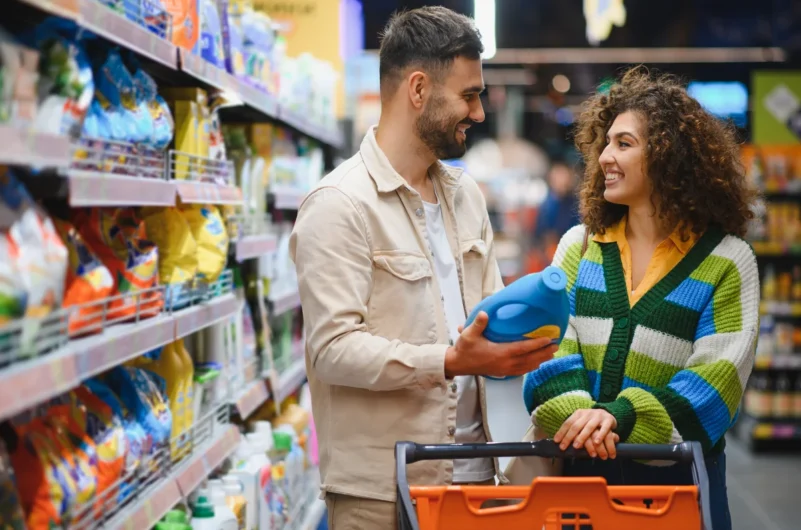
Successful Product Launch Localization: Tips for Brands isn’t about nicer copy; it’s about whether a new SKU actually survives its first year on shelf. For global FMCG players, the spread between a routine roll-out and a breakout hit usually comes down to how precisely launch mechanics are tuned to local retail conditions and shopper expectations. Treating this as a strategic capability, not an end-stage task, is now a competitive differentiator for global market adaptation rather than a nice-to-have.
“If your launch plan reads the same in Jakarta, Chicago, and São Paulo, you don’t have localization — you have an expensive global template.”
Why localization now defines launch success
In high-churn categories like snacks, beverages, and personal care, launch velocity is decided in weeks, not months. Retailers allocate space based on early rate of sale, and any friction — unclear claims, mismatched pack sizes, or the wrong promo mechanic — shows up fast in the numbers. Teams that build localized global launch plans around how people actually shop each channel consistently outperform those pushing uniform global toolkits.
From translation to strategic FMCG Localization
The most common failure mode is treating FMCG Localization as copy editing after global assets are locked. Effective teams start during concept definition, stress-testing the value proposition against consumer behavior insights in priority markets. That might mean reordering benefit claims for markets where price is the primary discriminator, or adapting format hierarchies where single-serve dominates. The objective isn’t linguistic neatness; it’s regionally tailored brand messaging that feels native in context.
Designing for real retail, not ideal briefs
On paper, a master pack and a universal TVC look efficient. In store, they collide with country-level shopper insights and local retail behavior trends. In parts of Southeast Asia, sachets, micro-bundles, and social commerce “try packs” are the real launch engines, while US club stores demand value-led multi-packs optimised for pallet displays and click-and-collect grids. Market-specific launch strategies respect retailer constraints, margin expectations, and the trade terms that actually decide secondary placements.
High-performing teams treat launch planning as an insight-to-shelf workflow, not a creative-to-asset pipeline. They anchor decisions in cross-border consumer insights and SKU-level data, not intuition. Data-driven regional campaigns are then built to support specific retailer asks: drive trial of a 3-pack in one chain, recruit light buyers to a premium variant in another. That’s where FMCG Localization proves its value, turning abstract positioning into localized FMCG growth strategies that can be measured week by week.
Building this as a repeatable muscle means standardising a few things: clear intake briefs that capture regulatory guardrails, regional marketing strategies that define what can flex, and simple governance so country teams know when they can adapt without re-litigating global strategy. The practical next step is a hard review of your last three launches: where were localization calls actually made, who owned them, and what slipped through? Use that audit to redesign your process, then align stakeholders on sharper market-specific launch strategies for the pipeline ahead. To pressure-test your current approach or explore deeper country-level shopper insights, speak with a specialist team and map where better localization could have shifted commercial outcomes.