

Picture a dragon. If you grew up in the West, your mind probably jumps to a fire-breathing monster hoarding gold, guarding castles, and tormenting knights. But in China, that same creature represents cosmic balance, imperial mandate, seasonal rain, and the very spirit of auspicious change. This isn’t a minor difference in storytelling — it’s a clash of worldviews. When working on Chinese to English localization, translators grapple with a profound problem: Chinese dragons are not metaphors. They are cultural infrastructure.
In English, dragons symbolize chaos and destruction. In Chinese culture, they embody heaven’s blessing, social order, and harmony between humans and nature. So how do you translate a word like “龙” when its cultural meaning isn’t merely different, but diametrically opposed? This article explores why Chinese mythological symbolism doesn’t survive literal translation, how dragons encode political authority and cosmological logic, and why Western audiences consistently misunderstand what Chinese stories are trying to say. If you’re curious how one creature can reshape global storytelling, buckle up — this dragon has more to teach than you think.
The Dragon Divide — A Cultural Misalignment
The Chinese dragon (龙 or 龍) isn’t a monster — it’s a benevolent force tied to prosperity, rainfall, and dynastic legitimacy. Meanwhile, Western dragons descend from Greco-Roman serpents and medieval Christian allegories, where serpents represent sin. This inversion makes direct translation impossible. You’re not just dealing with different creatures; you’re dealing with opposite cosmologies.
Dragons as Symbols of Authority and Legitimacy
In imperial China, the emperor was literally the “Son of Heaven,” and the dragon was his celestial emblem. Dragon motifs on clothing, architecture, and seals reinforced political legitimacy. Translating a term like “真龙天子” into True Dragon Emperor doesn’t communicate this cosmic endorsement — to English readers, it sounds like a fantasy title, not a political office backed by divine mandate.
Dragons and the Chinese Cosmic Order
Unlike Western mythology, which pits humans against beasts, Chinese cosmology sees dragons as mediators between heaven, earth, and water. Their forms combine multiple animals — fish, deer, tiger — symbolizing the interconnectedness of the natural world. Translating dragon-related cosmology requires more than vocabulary; it demands worldview translation.
Why Western Literalism Fails Chinese Myth Localization
A literal translation of 龙 as “dragon” misleads Western readers. However, replacing it with serpent, sky spirit, or rain deity strips cultural identity. Translators must walk a tightrope between accuracy and resonance. This is where localization diverges from translation — words are easy, equivalence is not.
Metaphor vs. Metonymy — Chinese Dragons Aren’t Decor
Western literature often uses dragons metaphorically — symbols of greed or danger. Chinese dragons, however, operate metonymically. When a dragon appears, it’s not a metaphor for power; it is power — either divine sanction or natural equilibrium. Lose that metonymy, and the narrative logic collapses.
Case Study — The Dragon Dance Misread Abroad
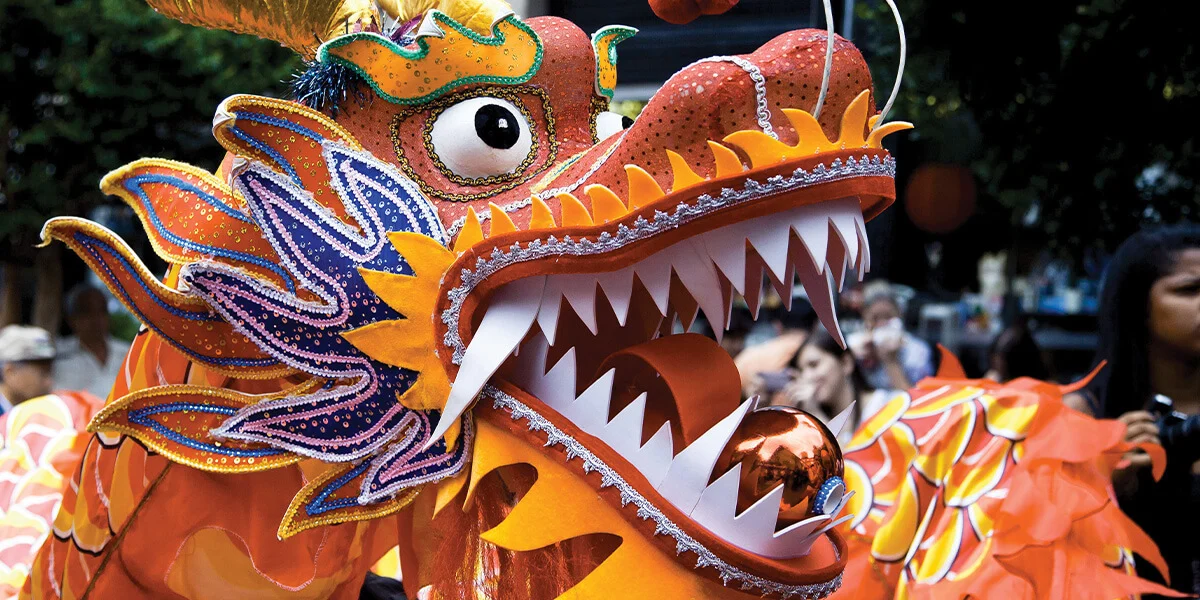
During Lunar New Year parades, Western travel sites casually describe the dragon dance as a “good luck performance.” In reality, the dance reenacts cosmic renewal — the dragon awakens spring through movement. Translating it merely as “luck” cheapens a seasonal ritual linked to agrarian cycles and state rites.
Localization must restore depth, not reduce meaning.
Why Dragons Aren’t Villains in Chinese Media
From animated series like Nezha Reborn to fantasy epics like The Longest Day in Chang’an, dragons appear as protectors, ancestors, or regulators of the natural world. English scripts often add antagonistic flavor to match Western expectations, bending narratives into shapes they were never meant to hold.
When Translation Rewrites Identity — Brand Examples
Chinese brands often use dragons in logos or product names to signal heritage, excellence, or spiritual grounding. When localized, this symbolism vanishes:
| Original Term | Literal Meaning | English Rendering | Lost Meaning |
| 龙泉剑 | Dragon Spring Sword | Longquan Sword | Divine origin missing |
| 龙井茶 | Dragon Well Tea | Green Tea | Sacred water lineage gone |
Global markets flatten what Chinese culture elevates.
So What Do We Do Instead?
Translators use transcreation—expanding text, adding footnotes, or reframing scenes so audiences understand why dragons matter. The goal isn’t exoticism; it’s accuracy. You’re not localizing a creature — you’re localizing cosmology.
Conclusion
Chinese dragons aren’t decorative creatures roaming old legends. They are structural elements of Chinese thought — symbols of political power, environmental harmony, and cosmic legitimacy. When Western translators treat dragons as monsters or metaphors, they don’t just mistranslate a word — they mistranslate a civilization. The key challenge in Chinese to English translation / localization is recognizing that dragons carry worldview, not just meaning. Preserving that requires sensitivity to cultural cosmology, mythic logic, and political symbolism. If you’re working across languages, don’t ask, “What does dragon mean in English?” Ask, “What role does dragon play in this world?” Only then can translation become transformation instead of distortion. Ready to rethink how you translate mythology? Your readers are waiting for the truth behind the scales.
FAQs
- Are Chinese dragons the same as Western dragons?
No. Western dragons are typically evil or destructive; Chinese dragons are auspicious, protective, and cosmological symbols. - Why can’t we just call 龙 a dragon?
Because the cultural meaning diverges so heavily that the English word misleads audiences. - Do dragons appear in modern Chinese media?
Yes. They appear as guardians, ancestral figures, and cosmic regulators, not as villains. - What is the dragon’s role in Chinese political history?
It legitimizes imperial rule and symbolizes the emperor’s authority as Heaven’s representative. - Can localization fix dragon mistranslation?
Only when it acknowledges cosmological meaning rather than imposing Western monster tropes.