

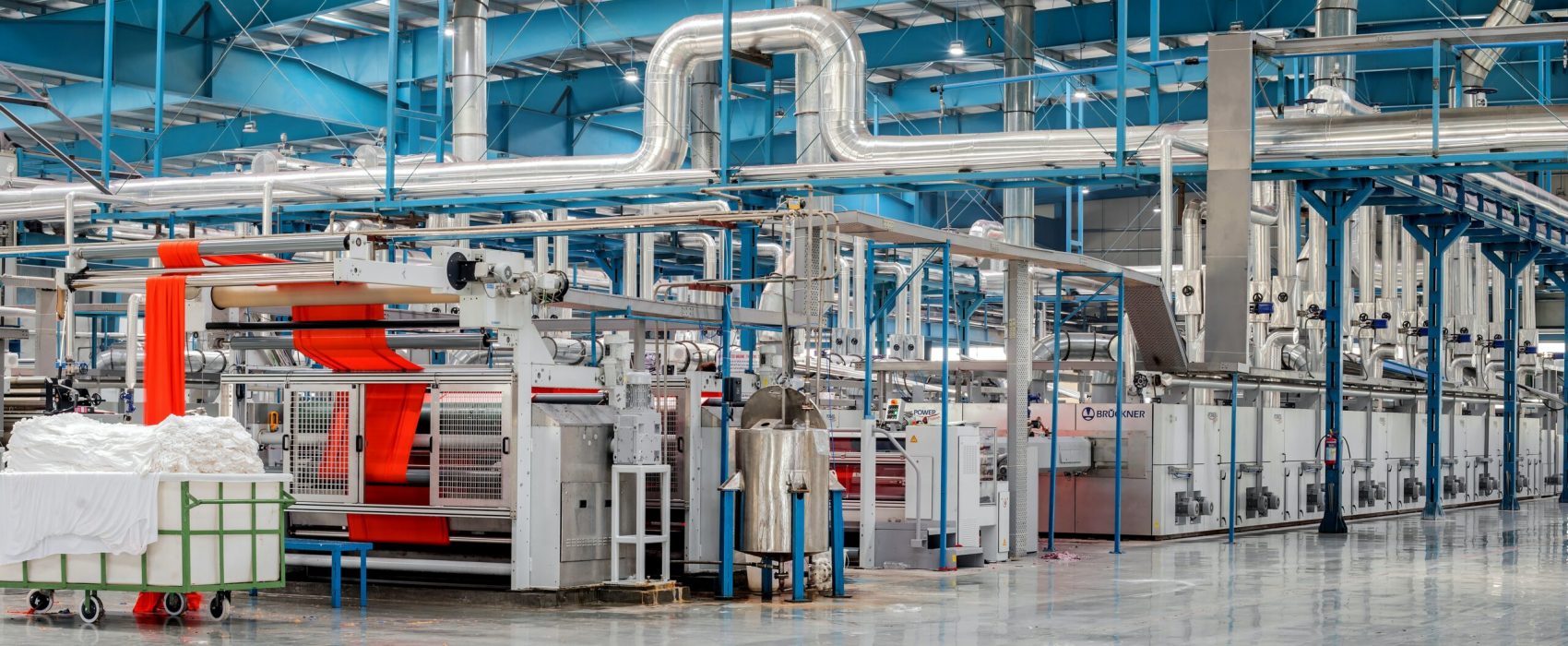
Denmark has a strong industrial backbone. Danish manufacturers operate in advanced machinery, renewable energy components, food processing equipment, maritime systems, and precision engineering. Many supply German, Nordic, and broader EU markets successfully. Operational quality is rarely the issue.
The challenge appears when Danish manufacturers target buyers in the US, UK, Middle East, or Asia-Pacific markets where English becomes the primary business language. Procurement teams in these regions often evaluate suppliers through English websites, capability decks, compliance documents, and technical brochures long before initiating contact.
And this is where Danish firms sometimes lose ground. Not because of technical weakness. But because their English content is written to inform — not to compete.
Winning global buyers requires English messaging structured around procurement psychology, risk reduction, and commercial differentiation. Literal translation of Danish materials does not achieve that.
Technical Precision Alone Doesn’t Win Tenders
Danish industrial communication culture is fact-based and understated. Product brochures typically emphasize technical specifications, tolerances, materials, and process quality. That clarity works well domestically and within European networks where engineering reputation is already established.
However, global procurement teams, especially in the US and UK, evaluate suppliers through layered criteria:
- Risk exposure
- Supply chain resilience
- ESG alignment
- Financial stability
- Scalability
- Compliance transparency
If English content focuses exclusively on technical precision without addressing procurement risk language, buyers see capability but not commercial safety.
For example, listing “High-precision CNC machining” is expected. Explicitly stating “Redundant production capacity with dual-site contingency planning” speaks directly to procurement concerns.
Global buyers assess risk before performance.
Real Example: Danish Wind and Industrial Supply Chains
Denmark is globally recognized in wind energy manufacturing, with companies like Vestas operating internationally. When Danish renewable manufacturers compete in global tenders, their English communication emphasizes reliability, supply chain resilience, and lifecycle cost reduction — not just engineering quality.
International buyers evaluating infrastructure suppliers look for clear articulation of long-term service agreements, spare parts logistics, and maintenance guarantees. Companies that succeed in global markets frame English messaging around operational continuity and financial predictability.
Smaller Danish manufacturers often present strong engineering data but underemphasize these commercial assurances in English content.
The gap is not competence. It is framing.
ESG and Sustainability Must Be Structured, Not Assumed
Denmark has a strong sustainability culture. Many Danish manufacturers naturally operate with environmentally responsible processes. However, global procurement teams increasingly require explicit ESG documentation in English.
Stating “We prioritize sustainability” is insufficient. Buyers expect structured English reporting on:
- Carbon footprint tracking
- Scope 1, 2, and 3 emissions
- Responsible sourcing
- Human rights policies
- Supply chain traceability
If ESG language is vague or loosely translated from Danish internal policies, international procurement teams may request additional clarification — or reduce supplier scoring.
Global buyers want structured proof, not implicit values.
Capability Decks Must Shift from Description to Differentiation
Danish manufacturers often produce English capability presentations that describe company history, production facilities, and quality certifications. While informative, these decks frequently lack competitive differentiation.
Global buyers evaluate multiple suppliers simultaneously. English capability decks must answer:
- Why choose this supplier over alternatives?
- What unique process advantage exists?
- How does cost structure compare over lifecycle?
- What innovation pipeline supports long-term value?
If the English narrative does not clearly articulate differentiation, procurement teams default to price comparison. And price comparison alone rarely favors smaller manufacturers competing globally.
Website Messaging Must Reflect Global Search Intent
Manufacturing SEO in English markets differs from Danish-language search behavior. Buyers in the US and UK often search for industry-specific application phrases rather than generic manufacturing capabilities.
For example, a Danish company might describe itself as “specialist in stainless steel solutions.” US buyers may search for “FDA-compliant stainless steel food processing components” or “marine-grade stainless fabrication for offshore applications.”
Without adapting English content to match application-specific search intent, manufacturers attract low-intent traffic rather than procurement-qualified leads. Localization must include industrial keyword alignment.
Supply Chain Resilience Is Now a Selling Point
Post-2020 global supply chain disruptions permanently altered procurement behavior. Buyers now evaluate redundancy, local warehousing, multi-source materials, and logistics flexibility more heavily.
English content that does not address supply chain stability signals risk. Even if internal systems are strong, failure to articulate them clearly in English reduces perceived reliability.
Global buyers want to know:
Can you deliver during disruption?
Can you scale production?
Do you have contingency plans?
If your English website does not answer those questions, competitors will.
Compliance and Certification Clarity
Certifications such as ISO 9001, ISO 14001, IATF 16949, or industry-specific approvals are common among Danish manufacturers. However, listing certifications without contextual explanation in English misses opportunity.
Procurement teams want to understand how those certifications translate into operational safeguards. English content should explain what compliance means in practical terms—traceability systems, audit cycles, documentation controls.
Translation alone lists credentials. Localization demonstrates reliability.
Conclusion: Competing Globally Requires Commercial English Strategy
Danish manufacturers have strong engineering culture and global credibility. But winning international buyers requires more than technical documentation translated into English.
English content must:
- Address procurement risk language
- Articulate ESG alignment clearly
- Demonstrate supply chain resilience
- Emphasize measurable differentiation
- Align with international search behavior
Global buyers evaluate suppliers through structured commercial lenses. If English messaging does not reflect those lenses, even excellent manufacturers lose momentum. Localization is not about improving grammar. It is about aligning with buyer psychology.
If the goal is to win global tenders and long-term procurement contracts, English content must be built as a competitive tool — not a translated brochure.