

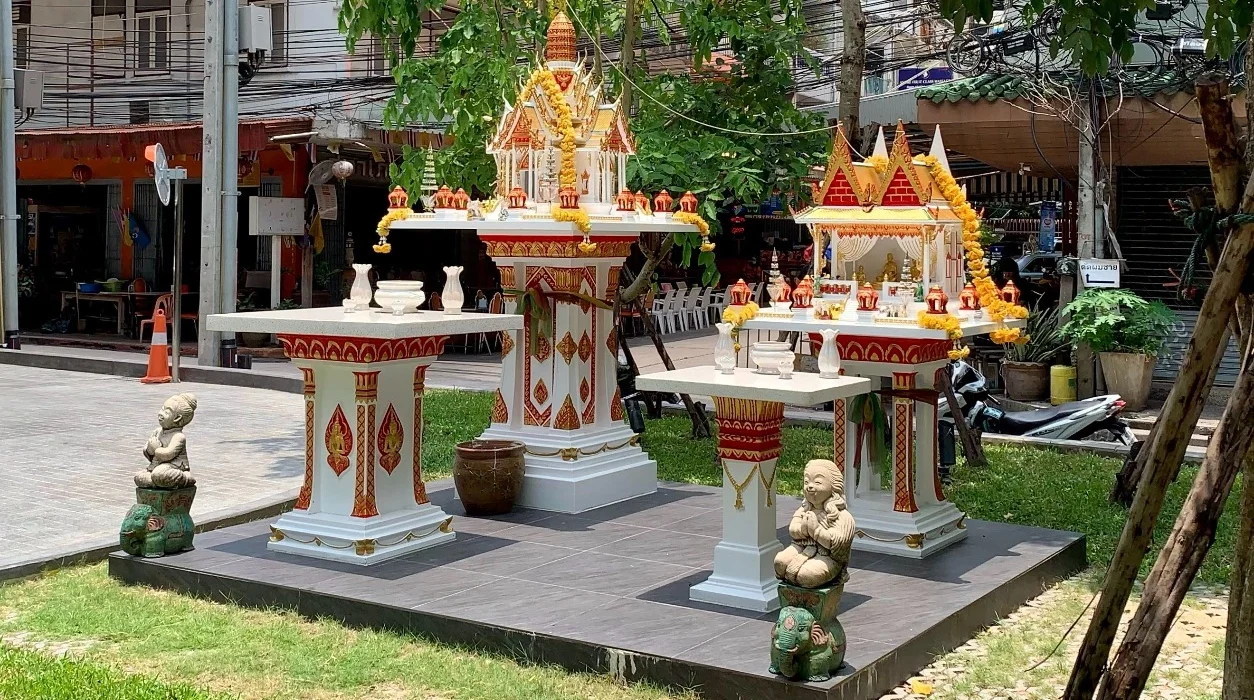
If you’ve ever walked through Thailand—past homes, office complexes, or shopping malls—you’ve likely noticed miniature shrines sitting on pedestals, decorated with incense, flowers, and offerings. To Thai people, these aren’t ornaments—they’re spirit houses, living symbols of reciprocity between humans and ancestral or territorial spirits. Now imagine trying to explain San Phra Phum (spirit houses) to a Western audience with no cultural reference point. Suddenly, the simplicity of translation disappears. Words alone can’t carry spiritual belief, ritual, or emotion. This is where the central challenge of Thai to English translation and localization emerges.
Translating Thai spiritual concepts requires more than linguistic accuracy—it demands cultural empathy. Concepts like phi, barami, and tham bun hold layers of cosmological meaning rooted in Theravada Buddhism, animism, and Brahmanistic traditions. When transferred into English, these ideas lose symbolic gravity unless contextualized. In this article, we explore how spirit houses act as Thailand’s spiritual soft power, why conventional translation falls flat, and what localization experts must do to preserve cultural meaning for English-speaking audiences. Brace yourself—Thai spirituality isn’t just another language puzzle; it’s a cultural worldview.
Understanding Spirit Houses in Thai Culture
What Is a Spirit House?
A spirit house, or San Phra Phum, is a small shrine placed outside a building to honor guardian spirits. Thais believe these spirits protect spaces and families when properly respected. Translating spirit house into English sounds straightforward, yet the phrase fails to reflect the cosmology behind its existence. English doesn’t encode ancestral reciprocity, making the concept appear quaint rather than vital.
The Role of Animism in Thai Daily Life
Thai spirituality blends Buddhism with animistic beliefs that acknowledge spirits in natural and built environments. This worldview shapes rituals, architecture, and behavior. English lacks a comparable cultural lens, so direct translation often strips away metaphysical context.
Why Translation Alone Is Not Enough
Loss of Spiritual Intent
Calling San Phra Phum a “shrine” implies worship, yet spirit houses are relational rather than devotional. Offerings aren’t prayers—they’re negotiations. This difference is essential in Thai to English translation: the intent changes when cultural motivations are misunderstood.
When Words Become Cultural Mistranslations
Terms like phi are commonly translated as “ghost,” but phi encompasses ancestral presences, territorial guardians, and mischievous spirits. In English, “ghost” evokes horror tropes, creating emotional misalignment.
Spirit Houses as Instruments of Soft Power
Exporting a Cultural Identity
Thailand’s tourism campaigns increasingly highlight spirit houses, not as superstition but as living culture. Foreign visitors encounter them and become intrigued, indirectly turning Thai belief systems into global cultural currency—soft power in action.
Commercial Adoption Beyond Thailand
Spirit houses now appear in Thai restaurants abroad, not as mere decor but as authenticity markers. However, without proper localization, audiences interpret them as novelty items, weakening cultural authority.
Localization Strategies That Actually Work
Contextual Translation Over Literal Words
Instead of substituting words, effective localization explains relationships: who the spirits are, why they’re honored, and how rituals maintain harmony. This method teaches meaning rather than merely transferring vocabulary.
Emotional Equivalence and Symbolic Framing
Localization experts borrow metaphors familiar to English speakers—like comparing spirit houses to ancestral memorials—to spark understanding without distorting meaning.
Case Studies in Cultural Misinterpretation
The “Ghost House” Problem
In a widely circulated travel guide, spirit houses were labeled “ghost houses,” sparking laughter among readers. The term misrepresented Thai cosmology, reducing sacred belief to folklore. Such errors demonstrate how mistranslation shapes perception.
Film and Media Localization Issues
Movies featuring Thai spirits often exaggerate horror elements, overshadowing nuanced spiritual relationships. English-language audiences absorb stereotypes, not realities.
The Future of Thai Spiritual Localization
Transcreation as Cultural Preservation
Transcreation combines translation with cultural storytelling, ensuring concepts resonate without distortion. This approach respects belief systems, allowing San Phra Phum to be understood without losing dignity.
Educating Foreign Audiences
The rise of cultural tourism encourages initiatives that explain spiritual practices, making translation a tool for cultural diplomacy rather than linguistic equivalence.
Conclusion
Spirit houses aren’t decorative curiosities—they’re portals into Thailand’s cosmology, identity, and belief systems. Attempting to translate Thai spirituality directly into English strips away emotional depth and cultural intent. As we’ve seen, spirit houses embody reciprocal relationships between humans and unseen forces, yet English lacks the linguistic and conceptual framework to express them accurately. True localization goes beyond words; it reveals meaning through context, emotion, and cultural resonance.
For translators, cultural consultants, and tourism professionals, the challenge is clear: treat spirit houses not as exotic artifacts but as expressions of Thai identity. Translation should clarify, not simplify. When done correctly, localization becomes soft power, transforming spiritual ideas into bridges of understanding rather than barriers. If you aim to connect English-speaking audiences with Thai spirituality, invest in explanation, empathy, and narrative—not literal word swaps.
FAQs
- Are spirit houses religious structures?
Not exactly—they honor spirits tied to land and ancestry rather than gods. - Why do Thai people offer food to spirits?
Offerings maintain harmony and invite protection from guardian spirits. - Is a spirit house the same as a shrine?
No. A shrine implies worship, while spirit houses foster coexistence. - Can spirit houses be translated without losing meaning?
Only through contextual and cultural explanation, not direct word replacement. - Why are spirit houses considered soft power?
They fascinate foreign audiences, turning Thai beliefs into cultural influence.