

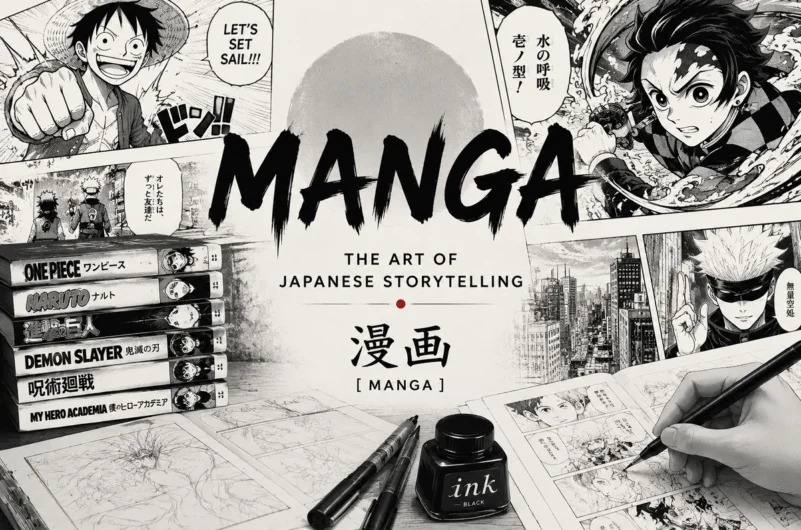
Manga localization has matured into an editorial discipline rather than a mechanical production step. For US readers, the benchmark isn’t literal fidelity but whether the English edition triggers comparable emotional and narrative responses. Japanese Manga Translation now sits at the center of catalogue strategy decisions, affecting brand perception, repeat readership, and how confidently publishers can handle culturally dense titles at scale.
Cultural relevance is no longer a “nice to have” in manga; it’s the core metric by which serious readers judge whether a publisher understands the medium.
Manga Localization Techniques: Ensuring Cultural Relevance
Fidelity-versus-fluency debates miss the real question: does the US edition preserve hierarchy, subtext, and humour in a way that feels intentional? That’s where specialised manga localization services create value, especially on long-running school or workplace series with shifting power dynamics. Cultural relevance here means deciding when to keep honorifics, when to surface politeness levels in phrasing, and when to let context do the heavy lifting instead of burying pages in translator notes.
Honorifics, speech levels, and relationship shifts
Honorifics like “-san” or “-senpai” don’t map cleanly into English, yet stripping them out often flattens character arcs. Skilled teams treat them as one tool in a broader system: sentence rhythm, contractions, and strategic formality all signal distance or intimacy. Rather than explaining every choice, editorial guidelines for manga localization define thresholds: where a term must be retained, where it can be naturalised, and where a brief front-matter note earns more trust than constant on-page explanation.
Rebuilding humor, slang, and visual constraints
Puns tied to kanji, variety shows, or regional food almost never survive literal treatment, so adapters focus on function: is this joke about status, self-deprecation, or meta-commentary? That mindset aligns more with comedy writing than with basic comic book translation tips. Similar trade-offs appear when localizing sound effects in comics, where partial redraws, layered fonts, or blended SFX solutions have to respect both US retailer sensitivities and the original artist’s page balance.
The most effective professional manga localization workflows look like compact editorial rooms, not outsourcing chains. Translators, adapters, letterers, and editors iterate quickly, then run contentious choices past small fan panels or long-time readers. That’s where anime and manga translation quality control actually happens in practice, rather than in abstract checklists. Teams that treat each series as a shared asset, not a ticket queue, are better positioned to manage complex comic and manga script adaptation without burning out staff or alienating core fans.
For publishers refining their strategy, the opportunity lies in codifying a house philosophy: when you’ll preserve cultural texture, where you’ll adapt aggressively, and which red lines you won’t cross even under retail pressure. That clarity supports everything from anime translation techniques to advanced comic lettering localization on spin-off titles. If your list includes even one culturally dense series, now’s the moment to audit it against these principles and identify three localization calls you’d handle differently—then document those decisions as your new baseline.