

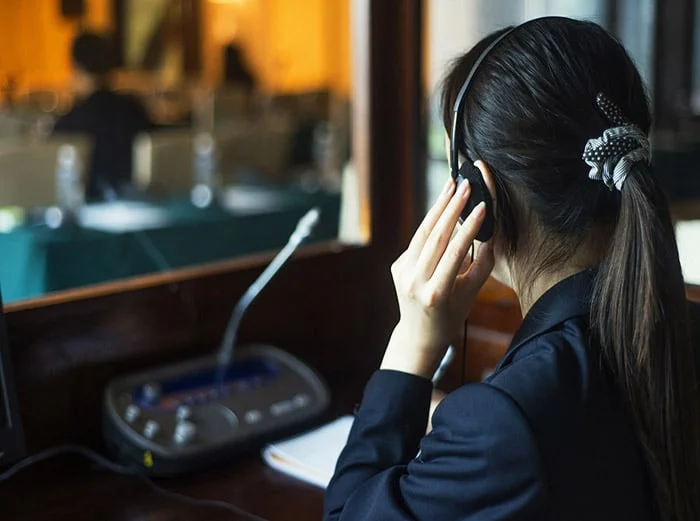
In today’s global business environment, Conference Interpretation plays a critical role in ensuring seamless communication across languages. Whether it’s a multinational summit, investor briefing, or industry conference, real-time translation allows participants to engage without language barriers. From soundproof booths to interpreter headsets and live audio channels, every element is designed to support accurate, real-time language interpretation.
For organizations hosting international conferences, understanding how conference interpreting works is essential. This guide explains the technology, process, and best practices behind successful multilingual events and how the right setup can directly impact clarity, engagement, and overall event success.
What Is Conference Interpretation?
Conference Interpretation refers to professional interpreting used in large-scale multilingual events where multiple participants speak different languages. The most common format is simultaneous interpreting, where interpreters translate speech in real time without interrupting the speaker.
For example, in a global tech conference, a speaker presenting in Japanese can be instantly interpreted into Italian for attendees using headsets. This type of setup is especially valuable for rare language combinations where direct interpreters may not always be available.
Why Simultaneous Interpreting Is Essential for International Conferences
In fast-paced international conferences, stopping for interpretation is not practical. Simultaneous interpreting ensures that:
- Events stay on schedule
- Speakers maintain their natural delivery
- Attendees remain engaged
Beyond efficiency, it also improves audience experience. When participants can follow content in real time, they are more likely to retain information and participate actively.
The Role of Interpretation Booths
Interpretation booths are not just visual fixtures, they are essential for performance.
A professional booth:
- Is soundproof to block external noise
- Provides clear visibility of speakers and screens
- Ensures interpreters can focus without distractions
In high-level events such as government summits or corporate forums, booths help maintain audio clarity and interpreter accuracy, which directly affects how messages are understood.
Headsets, Microphones, and Audio Systems
The success of conference interpretation depends heavily on audio quality.
A standard setup includes:
- Microphones capturing the speaker’s voice
- Interpreter consoles for language switching
- Headsets for attendees to select their language channel
Even minor audio issues, such as echo or distortion, can significantly impact comprehension.
Why Interpreters Work in Teams
Conference interpreters typically work in pairs or small teams per language.
This is because:
- Simultaneous interpreting is mentally demanding
- Interpreters need to rotate regularly
- One interpreter supports terminology and context
In technical conferences (e.g., medical, legal, or engineering), teamwork ensures accuracy when dealing with complex terminology.
Preparing for a Successful Multilingual Conference
Preparation is one of the most overlooked aspects of conference interpretation services.
To ensure quality, organizers should provide:
- Presentation slides
- Speaker notes or scripts
- Terminology lists and acronyms
- Event agenda and participant details
The earlier these materials are shared, the better interpreters can deliver accurate results.
Hybrid and Remote Conference Interpretation
With the rise of digital events, remote simultaneous interpretation (RSI) is becoming standard.
This allows interpreters to:
- Work from remote hubs or studios
- Support global events without travel
- Integrate with virtual platforms
However, hybrid setups require:
- Stable internet connections
- High-quality microphones
- Proper platform integration
When to Use Conference Interpretation
Conference interpretation is ideal for:
- International business summits
- Corporate global meetings
- Industry conferences and expos
- Government or diplomatic events
- Investor and stakeholder briefings
If your event involves multiple languages and large audiences, this approach ensures consistent and scalable communication.
Common Mistakes to Avoid
Even well-funded events can fail due to poor planning.
Common mistakes include:
- Weak audio or microphone setup
- No advance materials for interpreters
- Overloading a single interpreter
- Poor booth placement or visibility
- Ignoring hybrid technical requirements
Conclusion
Successful Conference Interpretation is a combination of expertise, technology, and preparation. From booths and headsets to interpreter teams and advance materials, every component plays a role in delivering accurate real-time communication. For businesses and international organizations, investing in professional interpreting is not just about translation, it is about creating a seamless experience for a global audience.
If you are planning an international event, working with a reliable localization partner ensures that your message is delivered clearly, professionally, and without compromise.
FAQs
What is conference interpretation used for?
It is used in international conferences and multilingual events to provide real-time translation so participants can understand content in their preferred language.
What equipment is needed for conference interpretation?
A standard setup includes booths, microphones, interpreter consoles, and attendee headsets for selecting language channels.
Can conference interpretation support rare language pairs?
Yes. Through relay interpretation, languages like Japanese to Italian can be supported even if direct interpreters are not available.
How many interpreters are needed per language?
Typically, at least two interpreters per language are assigned to ensure accuracy and manage workload.
Is remote conference interpretation reliable?
Yes, as long as the setup includes stable internet, good audio quality, and proper platform integration.