

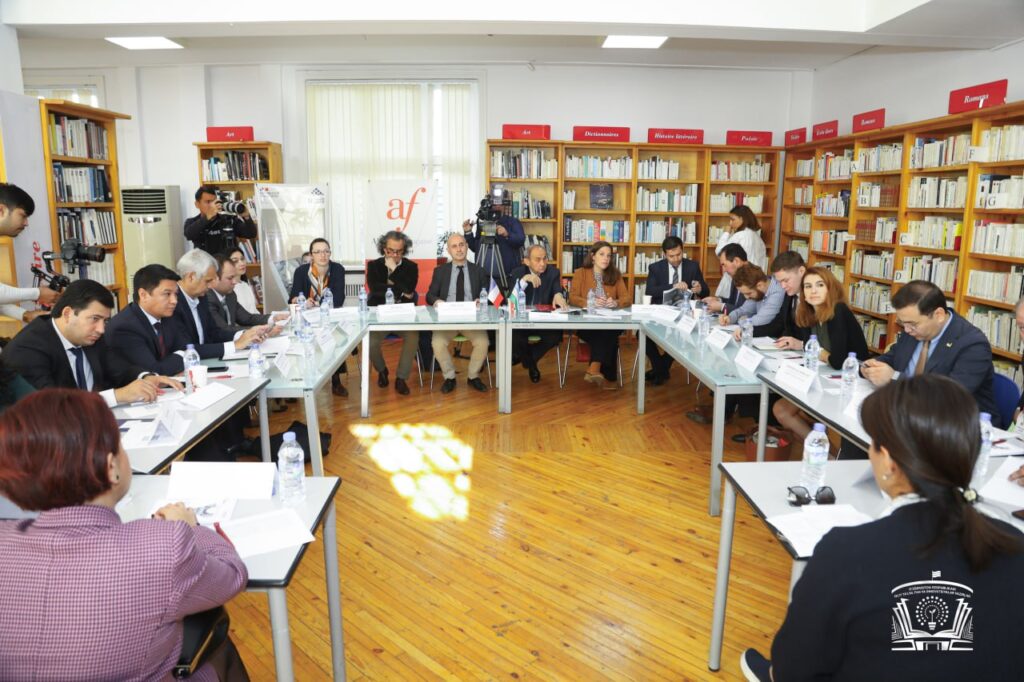
Academic roundtables are where ideas breathe. Researchers challenge assumptions, compare findings, test theories, and refine arguments in real time. Unlike a formal lecture, a roundtable is alive with interruptions, clarifications, follow-up questions, disagreements, and sudden insights. Now imagine that discussion moving between French and English. A scholar may introduce a concept in French, another may respond in English, and a third may summarize the point using field-specific terminology. If that conversation is not transcribed accurately, the research record can lose more than words. It can lose meaning.
French–English transcription plays a vital role in preserving academic discussions across languages. For universities, research institutes, policy groups, think tanks, and academic publishers, accurate transcripts help protect the integrity of multilingual research conversations. They make it easier to analyze themes, quote participants, prepare reports, support peer review, and share findings with international stakeholders. This article explores why transcription accuracy matters in academic roundtables, what makes bilingual research transcription complex, and how businesses and institutions can structure transcripts for reliable research use.
Why Academic Roundtables Need Accurate Transcription
Roundtables often produce dense, high-value discussion. Participants may build on each other’s points, refer to prior studies, challenge definitions, or introduce examples from different countries. In French–English settings, these conversations may include academic vocabulary, institutional names, legal references, historical context, or technical language that cannot be guessed from surface meaning.
Accurate transcription ensures the conversation can be reviewed after the event. Researchers may need to identify key themes, compare viewpoints, confirm who made a specific argument, or extract quotations for a report. A weak transcript can distort the discussion and lead to unreliable interpretation. If one participant’s cautious comment is transcribed as a firm conclusion, the research summary may become misleading.
In qualitative research, transcription is not just administration. It is part of the research process itself. The way speech is captured affects how evidence is interpreted, coded, and presented.
The Challenge of Multilingual Academic Speech
French–English academic discussions are rarely neat. Speakers may switch languages mid-sentence, quote sources in their original language, or use untranslated terms because no perfect equivalent exists. A political science roundtable may include French legal phrases. A public health discussion may use English technical terms inside French sentences. A literature panel may compare translation choices directly.
This language mixing is meaningful. It may show disciplinary preference, cultural identity, or conceptual precision. If a transcript forces everything into one language without noting the original wording, researchers may lose important context. For example, a French term like “laïcité” cannot always be reduced to “secularism” without explanation. In some academic settings, the original term matters because the debate depends on its cultural and legal history.
A strong transcript preserves these moments carefully. It may include the original language, an English or French translation, and notes where a concept has no direct equivalent.
Preserving Speaker Attribution and Discussion Flow
In academic roundtables, who said what matters. A statement from a senior researcher, field practitioner, graduate student, policy expert, or community representative may carry different analytical weight. Accurate speaker attribution helps preserve the structure of the discussion and supports ethical reporting.
Poor speaker labeling can create serious confusion. If one participant raises a concern and another responds with disagreement, the transcript must show that exchange clearly. Otherwise, later readers may think the group reached consensus when the discussion was actually contested. This is especially important when transcripts are used for research coding, grant reporting, white papers, or conference proceedings.
Discussion flow also matters. Roundtables often involve layered conversation, not isolated statements. A good transcript should show when a speaker is responding to a prior point, asking for clarification, or shifting the topic. Without that structure, the transcript becomes a pile of disconnected sentences instead of a usable research record.
Capturing Nuance, Hesitation, and Emphasis
Academic meaning is often hidden in nuance. A researcher may say, “That is one possible interpretation,” which is very different from saying, “That is the interpretation.” A French speaker may use conditional phrasing to signal caution. An English speaker may hedge with terms like “arguably,” “potentially,” or “in this dataset.” These small words matter because academic claims depend on levels of certainty.
Transcription accuracy should capture hesitation, emphasis, and qualifying language when relevant. This does not mean every “um” or pause must always appear in the final transcript. The level of detail depends on the research purpose. A clean transcript may remove filler words for readability, while a verbatim transcript may preserve pauses, false starts, and interruptions for discourse analysis.
For multilingual research, the transcript provider should understand the intended use. Is the transcript for publication, internal analysis, coding, or archival documentation? The answer determines how much detail should be preserved.
Supporting Qualitative Coding and Thematic Analysis
Many academic roundtables are transcribed so researchers can conduct qualitative analysis. They may code the transcript for themes, arguments, patterns, emotions, stakeholder positions, or policy implications. If the transcript is inaccurate, the coding becomes weaker.
For French–English transcription, consistent terminology is especially important. If the same French phrase is translated three different ways, the coding team may treat one concept as three separate ideas. A glossary helps prevent this. Key terms should be standardized across the transcript, especially in fields like medicine, law, education, sociology, climate research, and international development.
For example, a roundtable on migration policy may use recurring terms related to asylum, integration, border control, and social protection. If these terms shift randomly between French and English, the analysis becomes harder. Accurate transcription gives researchers a stable base for comparing ideas across speakers and languages.
Ethical and Confidentiality Considerations
Academic roundtables may include sensitive information. Participants might discuss unpublished findings, fieldwork challenges, political risks, institutional criticism, community experiences, or confidential project details. Transcription must protect that information.
A professional French–English transcription process should include secure file handling, confidentiality agreements, and clear rules about anonymization if needed. In some research settings, names may need to be replaced with participant codes. Identifying details may need to be removed from the transcript before analysis or publication.
Ethics also includes faithful representation. Participants should not be made to sound more certain, less articulate, or more extreme than they were. This is particularly important when working across languages. A transcript should respect the speaker’s intent and voice while making the content usable for the research team.
Why Human Review Matters in Academic Transcription
Automated transcription tools can be useful for first drafts, but academic roundtables often require human review. The speech may include accents, overlapping discussion, technical vocabulary, poor audio quality, and multiple speakers. In bilingual conversations, these challenges multiply.
Human reviewers can correct terminology, identify speakers, clarify unclear sections, and preserve context that software may miss. They can also flag uncertain words instead of silently guessing. This is important because false confidence is dangerous in research documentation. A transcript that looks polished but contains hidden errors can mislead analysis.
A strong workflow may combine AI-assisted transcription with expert bilingual editing. This gives teams speed without sacrificing the accuracy needed for academic use.
Creating Transcripts That Researchers Can Actually Use
A useful academic transcript should be structured, not just accurate. It should include timestamps, speaker names or codes, language indicators, clear paragraph breaks, and notes for unclear audio. If translation is included, the format should make it obvious what was originally said and what has been translated.
For example, a bilingual transcript may use side-by-side columns, inline translation notes, or a clean translated version with a separate original-language archive. The best format depends on the project. A research team preparing a public report may need polished English summaries. A linguistics team may need detailed original-language transcripts. A policy team may need executive-ready excerpts.
The transcript should serve the research goal. When it does, it becomes more than a record. It becomes a working research tool.
Conclusion
French–English transcription helps preserve the value of academic roundtables by capturing ideas, disagreements, terminology, and speaker intent across languages. In research settings, accuracy is not a luxury. It affects analysis, reporting, quotation, ethics, and long-term knowledge sharing. A poorly transcribed discussion can blur arguments and weaken findings, while a strong transcript gives researchers a reliable foundation.
For universities, think tanks, research agencies, and international organizations, professional transcription supports better collaboration across language barriers. It helps scholars review what was actually said, compare perspectives fairly, and turn complex multilingual conversations into usable research material. When transcription preserves both words and context, academic discussions remain alive long after the roundtable ends. The result is clearer analysis, stronger reporting, and a more faithful record of research in motion.
FAQs
- Why is transcription important for academic roundtables?
It preserves discussion details, speaker contributions, research arguments, and multilingual context for later analysis and reporting.
- What makes French–English academic transcription difficult?
Challenges include code-switching, technical terminology, accents, overlapping speech, and concepts that do not translate directly.
- Should academic transcripts be verbatim or cleaned?
It depends on the research goal. Verbatim transcripts help discourse analysis, while cleaned transcripts are better for reports and publication.