

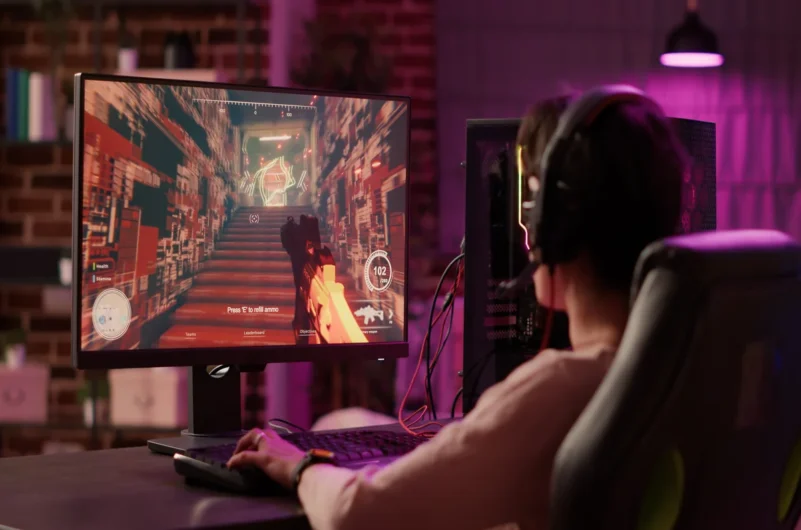
Studios investing in game localization services are often shocked when a new territory responds with negative Steam reviews, refund spikes, and hostile Reddit threads. On paper, everything looked covered: strings translated, store pages updated, marketing trailers subtitled. But once players in Germany, Brazil, or Southeast Asia get their hands on the build, mistranslated abilities, awkward menu labels, and broken UI expose deeper structural problems that weren’t caught during internal QA or basic linguistic checks.
Why generic vendors struggle with interactive content
The root issue is usually not raw language competence but a lack of fit between how games are built and how traditional translation pipelines work. Many studios still frame video game localization as a late-stage asset handoff to a vendor used to manuals or SaaS interfaces. That model tends to ignore context, variable constraints, and how systems text interacts with combat, progression, and UX flows. It’s why seemingly minor issues in ability descriptions or quest logs can destabilise balance understanding and undermine player trust in your core mechanics.
Game localization services vs. Gaming Translation specialists
When teams buy on rate cards and word counts, they often end up with generalist agencies that treat your RPG or gacha title like a marketing brochure. Gaming Translation providers, by contrast, usually keep linguists who play the genres they work on, maintain live glossaries, and test text in-engine. Without that, studios receive technically correct but emotionally flat dialogue that clashes with community slang, esports casting styles, or VTuber vocabulary, especially across multilingual gaming content where fan expectations are already very specific and vocal.
Misalignment becomes more obvious on titles with complex narratives or branching choices. Cheap workflows struggle with translating game narratives that rely on foreshadowing, recurring jokes, or character-specific speech patterns. In narrative-heavy projects, localizing game storylines demands continuity across DLC, seasonal events, and marketing beats, not just base-game strings. If your vendor isn’t tracking character arcs and lore across patches, it’s easy for references to drift or for a late expansion to contradict earlier quests in subtle but immersion-breaking ways.
Operational warning signs you can’t ignore
There are predictable red flags when a partner can’t handle the real-world pace of production. Terminology changing between patches is an early hint that translation memory discipline is weak. Live-ops teams feel the pain when seasonal events slip in secondary languages because the vendor can’t match your two-week sprint cadence. Console projects see it in TRC and Lotcheck issues tied to system messages, where a single non-compliant error string can blow out your submission calendar and derail carefully timed cross-language gaming experiences tied to sales or influencer campaigns.
The hidden cost of “good enough” text
Certification failures and refund spikes are obvious, but reputational damage creeps in more quietly. Story-focused game localization that misses tone in a key cutscene can trigger meme threads that stick with your brand for years. Misjudged jokes about religion or politics can get builds pulled from regional stores, especially in markets with tighter regulations around gambling mechanics and culturally aware game narratives. Once you’re hotfixing content under community scrutiny, even a small narrative-driven game translation flaw becomes expensive and politically sensitive to unwind.
For projects with heavy dialogue and character development, adapting branching game dialogue is where weak pipelines really break down. Tools that don’t expose conditions or speaker metadata make it easy for a vendor to shuffle pronouns, politeness levels, or social hierarchies in ways that feel jarring to players in Japan, Korea, or parts of Southeast Asia. That inconsistency kills immersive multilingual player journeys because players can’t reliably read social cues that the original writers considered fundamental to the story’s emotional arcs.
When to rethink your localization approach
Waiting for a launch disaster to rethink localisation is a luxury most teams can’t afford after one or two missteps. The better time to bring in specialist help is whenever your risk profile changes: moving from PC-only to console SKUs, adding text-heavy modes, or expanding into markets where story-focused fandoms dominate spend. At that point, a partner with a genuinely player-centric localization strategy, rather than a commoditised word factory, can audit your pipelines and show where your current provider is likely to fall over before you discover the gaps in public.
If you’re already seeing warning signs—discord screenshots of broken strings, certification pushbacks, or wildly divergent tone between trailers and in-client text—use that as a prompt to step back and review how your team approaches game localization services. A short, structured conversation with a specialist can surface whether your current workflows can realistically support the kind of story-focused game localization you’re planning for your next phase. Don’t wait for another launch to find out the hard way; speak with an expert and pressure-test your setup before the next milestone locks in.