

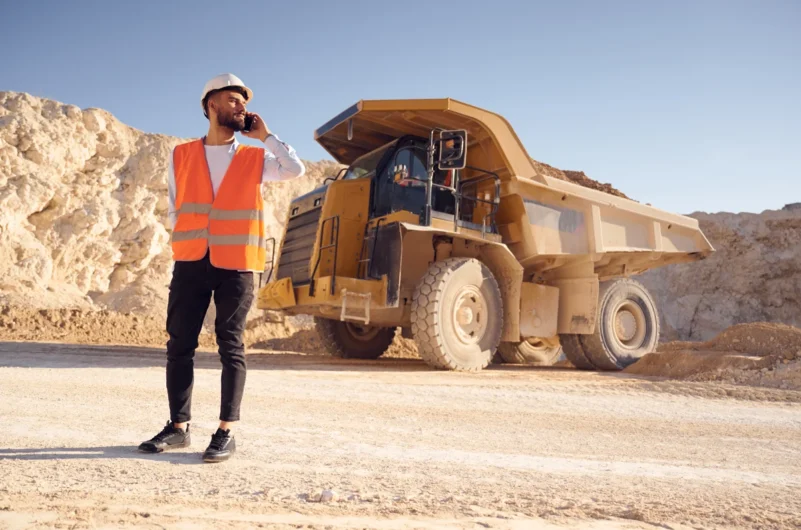
Mining safety training translations are now a critical control in US mining operations where Spanish, Portuguese, and Indigenous languages sit alongside English on site. When induction materials, refresher courses, and emergency response drills aren’t understood, the effectiveness of any training plan collapses. Mining Translation gives safety leaders a structured way to reach every crew member with the same level of detail on hazards, controls, and reporting expectations.
Why mining safety training translations matter
MSHA requires training to be effective, and that expectation clearly extends to language access. If a driller can’t fully follow a lockout–tagout sequence or misinterprets ground control signage, the mine’s residual risk increases sharply. High‑risk topics such as explosives handling, confined space entry, and diesel particulate exposure are too technical to rely on informal interpreting. Well‑planned multilingual mining safety content supports consistent understanding of rules, not just basic orientation.
Managing terminology without losing meaning
The hardest part isn’t word swapping; it’s keeping mining industry terminology consistent across procedures, training decks, and permits. Terms like rib, back, refuge chamber, and self‑rescuer must match how supervisors speak underground, not just how dictionaries describe them. That’s where specialised mining terminology glossaries become essential, especially when several contractors and regions are involved. If each contractor invents its own phrasing, incident investigations quickly reveal confusion across crews.
Consistent terminology isn’t a linguistic luxury; it’s part of your critical control verification.
Effective projects usually pair technical translation services with internal bilingual reviewers who understand both the plant and the pit. They validate that confined space controls, tagging conventions, and isolation points are described the way crews actually talk. This mix of external linguists and internal reviewers provides technical mining translation support while anchoring every decision in site practice. It also keeps translation for complex mining manuals aligned with MSHA rules and local standard operating procedures.
How a practical translation workflow looks on site
A realistic workflow starts with scoping: which modules truly require full translation, and which can rely on diagrams or bilingual coaching. High‑consequence tasks such as working at heights, mobile equipment interaction zones, and emergency evacuation routes usually sit at the top of the list. From there, language services for resource companies extract key terms, build industry-specific language solutions, and standardize templates before any sentence is translated. That upfront work avoids paying to translate outdated or duplicate content.
For many US operations, Spanish takes priority, followed by targeted language solutions for mining where workforce data shows need. Pilot sessions are worth the time: a small group attends the translated training, completes quizzes, and offers feedback on unclear phrases. Their responses often flag issues with accurate geological terminology translation or misunderstood gas monitoring instructions. Those insights refine multilingual mining safety content before it’s rolled out across shifts and contractors.
What safety leaders should check before approval
Before signing off, verify that Mining Translation uses consistent terminology across lockout procedures, job safety analyses, and mining HSE documentation translation. Ask who maintains the glossary, how updates are controlled, and how quickly changes flow into refreshed training packs. It’s reasonable to expect version control, reviewer sign‑off, and proof that critical instructions weren’t shortened to “sound better.” Skipping these checks tends to surface later as near‑miss patterns clustered in specific language groups.
If your operation is planning a major content refresh or moving to blended e‑learning, it’s an ideal time to rationalise English materials and then translate the consolidated set. That approach delivers cleaner, more accurate language services for mining while also reducing long‑term maintenance effort. To understand which training packages should be translated first and how to structure your review cycle, speak with a specialist and map your next steps with clear safety and compliance objectives in mind.