

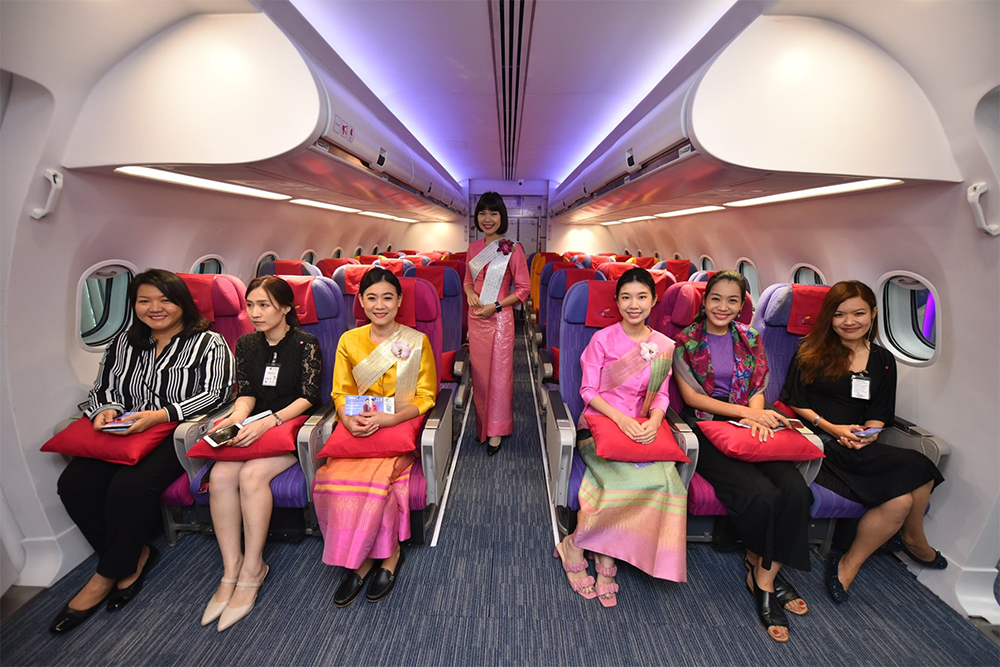
Airline operations run on precision. Every instruction, every checklist, and every protocol must be followed exactly as intended—there’s no room for interpretation errors when safety is on the line. Now consider this: airline crew members often come from diverse linguistic backgrounds, yet they must operate under the same strict safety standards. How do airlines ensure that every crew member fully understands critical procedures?
The answer lies in bilingual subtitles and structured localization. Training programs—especially those conducted in Thai and translated into English—must be crystal clear, consistent, and compliant with international aviation regulations. Subtitles don’t just support comprehension; they reinforce learning, reduce ambiguity, and ensure that safety protocols are universally understood.
Why Airline Training Demands Absolute Clarity
Airline crew training covers complex procedures—from emergency evacuations to in-flight medical response. These are not concepts that can be loosely interpreted. Every detail matters.
When training content is delivered in Thai but consumed by a multilingual crew, translation becomes a critical factor. Without accurate subtitles, key instructions may be misunderstood or overlooked. Bilingual subtitles ensure that both Thai-speaking and international crew members receive the same information with equal clarity, reducing the risk of operational errors.
How Bilingual Subtitles Reinforce Learning
Training isn’t just about exposure—it’s about retention. Subtitles enhance comprehension by allowing crew members to read and hear instructions simultaneously.
This dual-input approach improves memory retention, especially for technical procedures. For example, during safety demonstrations or simulation videos, subtitles help reinforce terminology and step-by-step actions. Crew members can revisit training materials with subtitles, ensuring they fully grasp critical concepts before applying them in real-world scenarios.
Supporting Compliance with International Standards
Airlines must comply with strict regulations set by global aviation authorities. Training programs must meet these standards, regardless of the language used.
Bilingual subtitles ensure that translated content aligns with official terminology and regulatory requirements. This is especially important when translating Thai training materials into English, as inconsistencies can lead to compliance issues. Accurate localization ensures that all crew members are trained according to the same standards, maintaining regulatory alignment across the organization.
Reducing Risk Through Consistent Communication
In aviation, miscommunication can have serious consequences. Subtitles help standardize communication across training materials, reducing variability in how instructions are interpreted.
By combining transcription and translation, airlines can create consistent subtitles that match spoken content precisely. This eliminates discrepancies between what is said and what is understood, ensuring that every crew member follows the same procedures. Consistency is key to minimizing risk and maintaining operational safety.
Combining Technology and Human Expertise
While automated subtitle tools can generate quick translations, they often lack the precision required for aviation training. Technical terminology, context, and tone must be carefully managed.
Professional localization ensures that subtitles are accurate, consistent, and aligned with industry standards. Combining AI-assisted transcription with human review creates high-quality subtitles that meet the demands of airline training programs.
Enhancing Crew Confidence and Performance
When crew members fully understand their training, they perform with greater confidence. Subtitles eliminate uncertainty, allowing staff to focus on execution rather than interpretation.
This confidence translates into better teamwork, faster response times, and improved passenger safety. In high-pressure situations, clear understanding can make all the difference.
Conclusion
Bilingual subtitles are a critical component of effective airline training programs. They bridge language gaps, reinforce learning, and ensure compliance with international safety standards. For airlines operating in multilingual environments, investing in accurate Thai–English subtitle localization is essential.
By combining structured transcription, precise translation, and professional localization, businesses can create training materials that are clear, consistent, and reliable. In an industry where safety is paramount, subtitles are not just a support tool—they are a safeguard.
FAQs
- Why are subtitles important in airline training?
They ensure all crew members understand safety procedures clearly, regardless of language. - Do subtitles improve training retention?
Yes, reading and hearing content simultaneously enhances comprehension and memory. - Can automated subtitles be used for airline training?
They can assist, but human review is necessary for accuracy and compliance. - How do subtitles support safety?
They reduce miscommunication and ensure consistent understanding of procedures. - What languages are commonly used in airline training?
English is standard globally, often paired with local languages like Thai.