

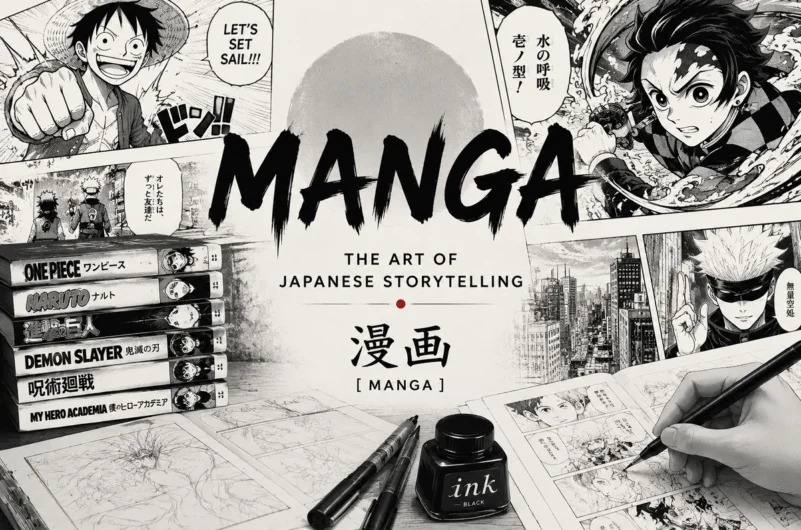
Quality Assurance in Manga: Ensuring Accuracy and Clarity
Quality Assurance in Manga: Ensuring Accuracy and Clarity matters most when readers start doubting whether they can trust a translation from volume to volume. American fans instantly notice when character voices drift, jokes fall flat, or continuity breaks between chapters. That’s why serious publishers treat QA as a defined, repeatable workflow, not a last-minute spellcheck. A structured approach gives you confidence that each release reflects the author’s intent while still reading like natural US English. It also reduces the very real risks of reprints, support requests, and social backlash when a high-profile title stumbles.
Readers forgive the odd typo; they don’t forgive scripts that feel inconsistent, careless, or out of character.
Why a defined QA pipeline builds reader trust
Behind every reliable series is a clear pipeline: core translation, line editing, localisation shaping, technical checks, then a cold read. Japanese Manga Translation teams that map these stages upfront can show exactly who’s responsible for tone, who owns cultural choices, and who signs off on printer-ready files. That transparency reassures publishers who’ve been burned by rushed, one-editor workflows. It also gives fans confidence that feedback about a specific issue, such as a misinterpreted catchphrase, can be traced back and prevented in future volumes through best practices for manga QA.
Manga localization services that skip documented stages often rely too heavily on individual talent, which is risky when schedules tighten or staff change. A defined pipeline, with handoff notes and style decisions logged, lets new editors join mid-series without reinventing choices around honorifics or regional slang. That’s crucial when you’re handling long-running shōnen titles or complex josei dramas where casual inconsistencies quickly snowball. Clear QA ownership doesn’t just protect one book; it protects the entire catalogue from brand-damaging variance.
Balancing accuracy, readability, and visual constraints
Readers want culturally accurate manga dialogue without needing a cultural studies degree to follow the plot. Striking that balance means making deliberate, documented calls on when to explain, when to adapt, and when to leave terms untouched. Experienced teams use anime translation techniques selectively, recognising that what works in subtitles doesn’t always fit speech bubbles with tight character limits. The goal isn’t to flatten Japanese nuance, but to avoid scripts that feel like direct glosses instead of living dialogue.
Professional manga localization workflows also factor in page design from day one. Translators and letterers work together on integrated manga translation and lettering so that rewritten lines still fit balloon geometry, tail direction, and emphasis hierarchy. That focus on visual consistency in manga translation is what prevents awkward font size shifts, overstuffed balloons, or orphaned sound effects that pull readers out of the scene. When fans see that care, their baseline expectation becomes that your editions are worth preordering, not waiting for “fixed” reprints.
Standards, checklists, and realistic safeguards
Trust grows when you can explain how errors are prevented, not just how they’re fixed. Teams that maintain style guides, term banks, and issue logs are far more likely to deliver publisher-ready manga translation quality on tight deadlines. Practical tools like checklists for cultural references, page-flow clashes, and world-building terminology reduce variance across volumes. They also make it easier to apply precise comic book translation tips, such as how to handle recurring attack names or wordplay tied to panel layout.
Even strong processes have limits, and readers respect it when publishers admit that. Quality-focused comic localization acknowledges constraints like inherited licensing scripts, compressed print windows, or legacy typesetting files that can’t be fully rebuilt. What matters is being open about errata policies, digital corrections, and how fan feedback is triaged into future QA passes. When you can walk a client or reader through your quality controls step by step, multilingual manga and anime localization stops feeling like a black box and starts feeling like a partnership.
If you’re ready to back your next release with a more disciplined approach to quality, our team can review your current workflow, flag risk points, and suggest targeted improvements rather than sweeping, unrealistic overhauls. Whether you need a full audit of professional manga localization workflows or a focused second look at a single flagship series, we’ll show you exactly how our process reduces uncertainty and protects your brand. Talk with us today about how tighter QA can give your readers more confidence in every volume and help your editorial team sleep a little easier between chapters.