

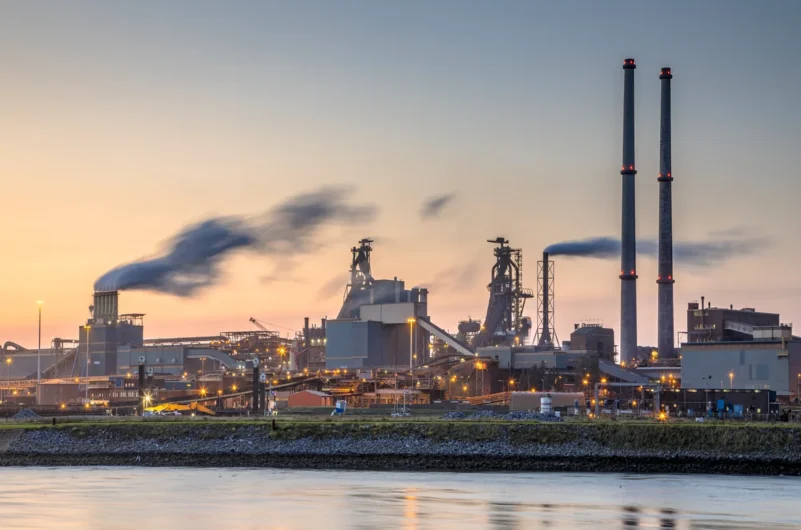
Mining companies are quietly rewriting how they handle multilingual communication as projects stretch across Australia, Southeast Asia, and Latin America. The future of Mining Translation isn’t about “nice-to-have” localization; it’s about avoiding safety incidents, permit delays, and messy contract disputes. When drill programs, contractor briefings, and ESG disclosures run in three to ten languages, weak processes show up quickly in the pit and in the boardroom.
1. Treat language as operational infrastructure, not admin
Most miners still treat translation as a last-minute procurement task, routed through document control or HSE with no strategy. That’s when outdated glossaries, ad hoc vendors, and improvised fixes start distorting mining industry terminology across sites. Treating language as infrastructure means planning capacity against project pipelines, aligning budgets with risk levels, and giving operations a clear channel for urgent work so supervisors aren’t sending critical updates via unofficial WhatsApp translations.
2. Shift from generalists to engineering-focused mining translators
Generic technical translation services rarely hold up against real-world pit designs, block models, and process plant commissioning documents. On multi-billion-dollar projects, one mistranslated clause on throughput guarantees or concentrate moisture can trigger arbitration. Teams that use engineering-focused mining translators build domain-specific glossaries, handle JORC and NI 43-101 references correctly, and understand how geotech logs, tailings storage facility designs, and ventilation plans fit into broader project approvals.
3. Use tiered workflows, not one-size-fits-all quality
Operations teams often expect one turnaround time and one price point for everything from toolbox talks to feasibility studies. That’s rarely realistic. A pragmatic model uses raw MT for internal orientation material, light post-editing for routine maintenance bulletins, and full human review for regulator-facing documentation and HAZOP outputs. This keeps multilingual mining documentation moving without sacrificing accurate terminology in mining documents where liability exposure is high.
4. Connect terminology, memory, and site systems
Spreadsheets of terms sitting on someone’s desktop don’t scale when Jakarta, Perth, and Santiago all touch the same standard. Central termbases and translation memories integrated into SharePoint, Procore, or document control platforms keep mining technical vocabulary consistent across manuals, MSDS/SDS, and contractor scopes. The real win comes when supervisors and planners can search approved language solutions for mining directly from the systems they already use, instead of rewriting content every shutdown.
5. Match ESG and community comms to real linguistic risk
Social performance and ESG teams are translating more content than ever: FPIC materials, local hiring commitments, grievance mechanisms, and resettlement frameworks. Here, literal phrasing can undermine trust, especially in Indigenous and rural communities. Specialized mining translation partners familiar with local governance, land access sensitivities, and regional dialects in Southeast Asia provide technical language support for miners without sounding like corporate spin, reducing the gap between what’s promised in English and what’s heard on the ground.
- You’re fielding recurring queries from sites about confusing translated SOPs or isolation procedures.
- Local contractors are rewording critical safety content because the official versions don’t match site reality.
- Legal or commercial teams flag inconsistencies between English contracts and translated versions during tendering.
- Community liaison officers report misunderstandings around resettlement, water use, or benefit-sharing commitments.
- Project leaders complain that global communication for mining teams slows down approvals or causes rework.
If any of this sounds familiar, it’s time to audit your Mining Translation setup. A credible partner should act as resource sector translation experts, map workflows against your project schedule, and help classify content by risk instead of just word count. The right team can coordinate engineering-focused mining translators across languages, tighten governance, and give you a clear escalation path for safety-critical content. To reduce translation-related risk on upcoming studies, expansions, or closures, book a short consultation and benchmark your current language solutions against industry best practice.