

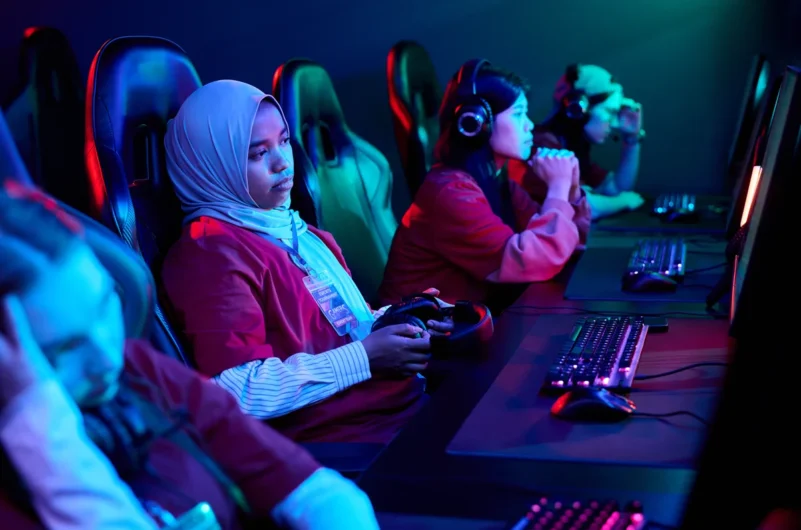
Subtitle translation for games requires precise localization, cultural awareness, and technical accuracy. When you’re planning video game localization across multiple regions, subtitle quality often determines whether players stay immersed or reach for the settings menu in frustration. Done well, subtitles enhance player immersion and accessibility while preserving the game’s tone and narrative impact, turning casual players into long-term fans and advocates for your studio.
1. Respect character limits without losing impact
Good subtitle translation for games balances brevity with clarity and fits strict UI constraints. On consoles and handheld devices, you’re often restricted to around 35–42 characters per line, with even tighter limits on older hardware. That forces translators to prioritise intent, emotional punch, and critical gameplay cues over literal wording. If you ignore this, subtitles will clip, stack awkwardly, or collide with HUD elements during combat, undermining subtitle quality for games and creating avoidable support tickets after launch.
2. Protect narrative voice, not just literal meaning
Players notice instantly when a character’s voice shifts between cutscenes and on-screen text. Localising game subtitles isn’t about swapping words; it’s about translating game narratives so tone, register, and humour feel native in every market. Irony, sarcasm, and slang often need transcreation so a grizzled commander doesn’t read like a teenager, and a nervous NPC doesn’t accidentally sound hostile. Strong character bibles and lore documents make story-driven game translation more consistent across subtitles, UI, and marketing beats.
3. Align subtitles with timing and gameplay flow
Even the sharpest writing fails if it appears too late or disappears mid-line. For fast shooters, branching RPGs, and dialogue-heavy indies, teams need capture footage or dev builds to fine-tune timing. A common benchmark is 15–17 characters per second, adjusted down for younger audiences or text-heavy sequences. Without that attention, subtitles will linger after a twist is revealed, spoil punchlines, or clash with scene cuts, disrupting cross-language game storytelling at key emotional beats.
4. Tackle cultural references and sensitive themes early
Pop-culture jokes, memes, and region-specific wordplay often break once you step outside the source market. Effective Gaming Translation replaces jokes that won’t land with locally relevant equivalents while keeping lore intact. At the same time, translators must flag content that may affect age ratings or platform approvals, from suggestive dialogue to political references. Having a clear escalation path with narrative design and legal avoids last-minute script surgery that can derail immersive narrative localization shortly before certification deadlines.
5. Test with real players, not just linguists
Desktop review alone won’t reveal how subtitles behave in a chaotic boss fight or handheld mode. Native-speaking LQA testers should run through critical paths, co-op modes, and streaming overlays to check readability, timing, and localised content for gamers under real conditions. They often catch issues like subtitles obscuring quick-time prompts, mistranslated quest hints, or late-triggering lines that tools missed. Those findings feed a final polish pass that turns multilingual gaming content into truly global-ready gaming content rather than a box-ticking exercise.
- Treat subtitle limits as design constraints, not afterthoughts.
- Invest in style guides and character bibles for consistent voice.
- Give linguists build access so they can localizing game subtitles in context.
- Plan time for cultural review of culturally adapted game dialogue well before cert.
- Schedule LQA on target platforms to stress-test every subtitle-heavy scene.
If you’re planning video game localization or refreshing an existing release, partnering with a team experienced in translating game narratives can save months of rework and reputation damage. Our specialists combine narrative craft with technical know-how to deliver localizing game subtitles that respect your vision and your players’ time. Talk to our team today to scope a subtitle pipeline that suits your budget, protects your IP, and gives global audiences the experience they expect.