

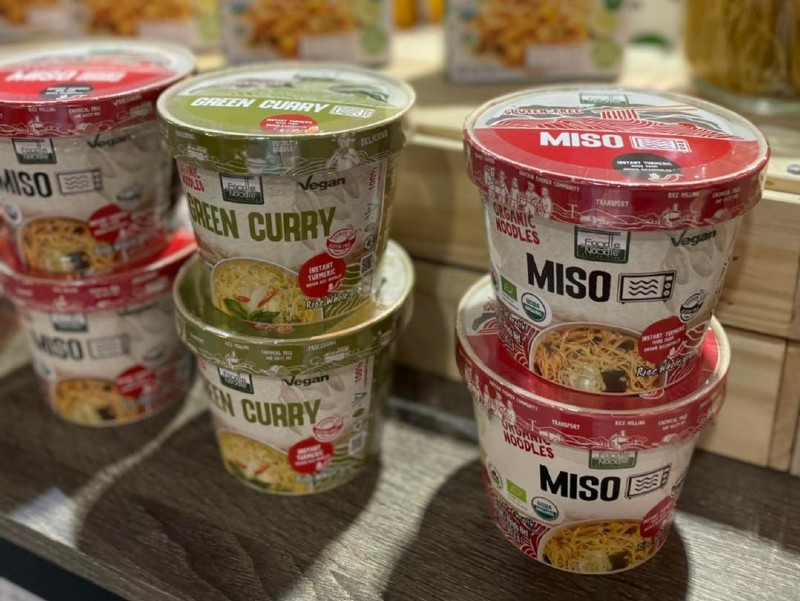
Why Food Label Localization Matters
In the EU, food labeling is heavily harmonized under Regulation (EU) No 1169/2011, which sets general rules for food information to consumers. In APAC, the challenge is different because “APAC” is not one legal market. Japan, China, South Korea, Singapore, India, Australia, New Zealand, Thailand, Indonesia, and Vietnam each have their own rules.
That means a label that works in France may not work in Japan. A pack approved in Australia may still need changes before entering Indonesia or China.
APAC vs EU Food Labeling: Core Differences
The EU market is more unified. Once a food label follows EU-level rules, it can often be adapted across member states with correct language localization and country-specific details.
The APAC market is more fragmented. ASEAN has guidance for prepackaged food labeling, but national laws still control final compliance. ASEAN’s general food labeling standard focuses on consumer protection and fair trade practices.
| Area | EU | APAC |
| Legal structure | Mostly harmonized | Country-specific |
| Language | Official language of target country | Local language often required |
| Allergens | Strong standardized emphasis | Varies by country |
| Claims | Strict EU authorization | Varies widely |
| Nutrition label | Standard format | Different formats by market |
| Importer info | Required | Usually required |
Mandatory Food Label Elements
Most markets require these basics:
Product name must clearly describe the food. Avoid creative names that hide the real nature of the product.
Ingredient list should appear in descending order by weight. Additives, flavorings, and compound ingredients may need special formatting.
Net quantity must use the correct unit. The EU uses metric units. APAC markets also generally use metric, but formatting rules can differ.
Date marking must be localized carefully. “Best before,” “use by,” and manufacturing dates do not mean the same thing everywhere.
Storage instructions must match climate and handling conditions. This is especially important in hot and humid APAC markets.
Manufacturer, importer, or distributor details are often required so authorities and consumers know who is responsible for the product.
Allergen Label Localization
Allergens are one of the highest-risk parts of food labeling.
In the EU, allergens must be clearly emphasized in the ingredients list, often through bold text, uppercase, or another visible style under Regulation (EU) No 1169/2011.
In APAC, allergen rules vary. Some markets require specific allergen declarations, while others expect allergens to be shown in the ingredient list or warning statement. Do not simply translate the EU allergen line and assume it is valid everywhere.
Nutrition Labeling Requirements
The EU requires a nutrition declaration for most prepacked foods, usually covering energy, fat, saturates, carbohydrate, sugars, protein, and salt.
APAC nutrition labeling depends on the country. Australia and New Zealand follow the Food Standards Code, which includes general and product-specific labeling requirements. FSANZ also notes that food labels help protect public health by showing allergens, ingredients, dates, storage, preparation instructions, and warnings.
ASEAN also has nutrition labeling guidance, including front-of-pack nutrition labeling principles, but implementation depends on national law.
Claims, Symbols, and Marketing Text
Claims are risky because they turn marketing language into regulated language.
In the EU, nutrition and health claims must be clear, accurate, and based on scientific evidence. Misleading claims are prohibited. EFSA also reviews health-claim evidence to support EU decision-making.
In APAC, claims such as “low sugar,” “immune support,” “high protein,” “natural,” “organic,” “halal,” and “vegan” may need local review. Some countries require certificates for halal or organic claims.
Packaging Design and Cultural Localization
Good localization is not just translation. It includes:
| Element | What to Check |
| Language | Local legal language and consumer-friendly wording |
| Colors | Cultural meaning and category expectations |
| Images | No misleading fruit, dairy, or health imagery |
| Serving size | Match local eating habits |
| Units | Use accepted local metric format |
| Icons | Confirm symbols are legally allowed |
| Claims | Review every front-pack statement |
Common Mistakes to Avoid
Do not use one “APAC label” for all APAC countries. Do not rely on direct machine translation. Do not forget importer details. Do not copy EU claims into APAC markets without review. Do not use health claims unless they are approved. Do not ignore font size, allergen emphasis, and date format rules.
Step-by-Step Food Label Localization Process
- Identify the exact target country.
- Build a regulatory checklist.
- Translate using food-label specialists.
- Review ingredients, allergens, and additives.
- Convert nutrition values and serving sizes.
- Check claims, icons, and certifications.
- Validate artwork before printing.
- Keep approval records for audits.
Conclusion
How to Localize Food Labels for APAC vs EU Markets comes down to one key rule: never treat localization as simple translation. The EU needs strong compliance with harmonized food information rules, while APAC needs country-specific adaptation. Brands that localize ingredients, allergens, claims, nutrition panels, language, and design carefully can reduce risk and build consumer trust.
FAQs
- Is one food label enough for all EU countries?
Usually, the core label can follow EU rules, but language and country-specific requirements still matter.
- Can I use one label for all APAC markets?
No. APAC markets have different laws, languages, claims rules, and nutrition formats.
- What is the biggest difference between APAC and EU food labels?
The EU is more harmonized. APAC requires more country-by-country localization.
- Are health claims allowed in both markets?
Yes, but only when they meet local legal rules and evidence standards.
- Should allergens be translated?
Yes. Allergens must be clear in the local language and formatted according to local rules.