

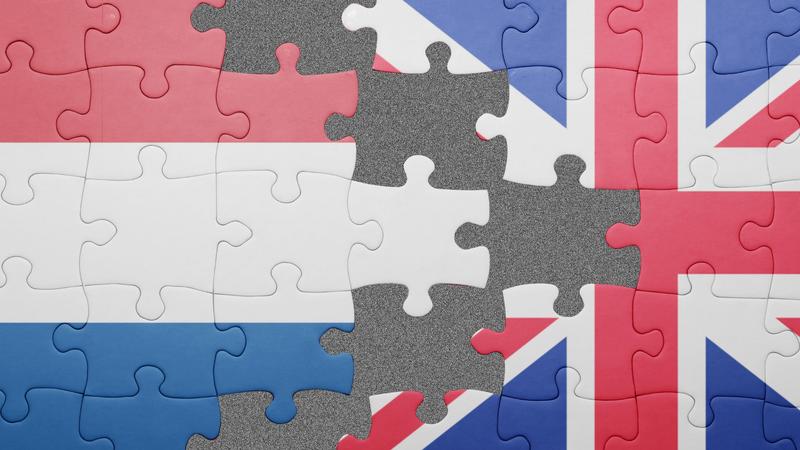
When the United Kingdom formally exited the European Union, headlines focused on tariffs, customs checks, and political fallout. But for Dutch exporters, the real disruption wasn’t just logistical. It was linguistic and documentary. The Netherlands has long been one of the UK’s largest EU trading partners. Dutch businesses export everything from agricultural products and chemicals to machinery and high-tech components. Before Brexit, trade operated within a harmonized regulatory framework. Documentation standards were relatively aligned. Legal expectations were clearer.
Brexit fractured that simplicity.
Suddenly, exporting to the UK meant navigating a separate regulatory system. Customs declarations multiplied. Product compliance documentation tightened. Contracts required closer scrutiny. And English documentation—already important—became absolutely critical. For many Dutch companies, the realization came quickly: functional English was no longer enough. Documentation had to be precise, structured, and legally aligned with UK standards.
The Administrative Shock of New Trade Barriers
Before Brexit, goods moved between the Netherlands and the UK with minimal friction under EU single market rules. After Brexit, exporters faced customs declarations, rules-of-origin documentation, and new product conformity requirements. According to data from the Dutch Central Bureau of Statistics (CBS), trade volumes initially dropped sharply in early 2021 due to administrative bottlenecks rather than lack of demand. Many of those bottlenecks were tied to documentation errors, incomplete customs paperwork, or unclear compliance declarations written in English.
The issue wasn’t just translation. It was regulatory alignment.
English export documentation now needed to reflect UK-specific requirements separate from EU frameworks. Slight ambiguities that might have been tolerated within EU trade processes could now trigger delays at UK ports. In international trade, unclear paperwork equals stalled shipments.
Customs Declarations and Rules of Origin Complexity
Brexit introduced strict rules-of-origin requirements. Dutch exporters now had to prove that goods qualified for preferential tariff treatment under the EU-UK Trade and Cooperation Agreement. This meant English documentation needed to clearly state manufacturing origin, material sourcing, and processing details. Vague phrasing or loosely translated production descriptions could result in tariff disputes.
For example, if a Dutch manufacturer exported assembled machinery with components sourced globally, the English declaration of origin had to be exact. Misalignment in terminology could result in customs authorities questioning eligibility for tariff-free access. Precision in English became not just a marketing issue—but a financial one.
Contractual Adjustments Under UK Law
Brexit also affected commercial contracts. Dutch companies previously operating under EU harmonized regulations now had to consider UK-specific legal frameworks. Distribution agreements, liability clauses, and jurisdiction statements required revision. Contracts written in English could no longer assume EU dispute resolution structures.
If English agreements were simply copied from pre-Brexit templates, they often failed to reflect updated legal realities. Companies needed contracts adapted to UK law expectations rather than relying on EU-aligned structures. Again, the issue wasn’t fluency. It was structural localization.
Regulatory Divergence and Ongoing Pressure
Brexit was not a one-time adjustment. Regulatory divergence between the UK and EU continues to evolve. Product labeling requirements, conformity markings (such as the UKCA marking replacing CE marking in some cases), and compliance language have changed gradually over time. Dutch exporters must now monitor two regulatory ecosystems when drafting English documentation—one for EU markets and one for the UK.
That increases the complexity of product manuals, safety instructions, and packaging information. English documentation must be tailored specifically to UK compliance standards, not treated as a generic international version. In export environments, documentation quality directly influences operational efficiency.
The Financial Cost of Weak Localization
Delays at customs checkpoints result in storage fees, reprocessing costs, and lost client confidence. For companies operating on tight margins, repeated documentation corrections erode profitability. Beyond immediate financial impact, reputation suffers. UK buyers expect suppliers to understand regulatory frameworks and deliver compliant documentation without repeated revision cycles.
When English documentation appears inconsistent or inadequately adapted, it signals operational immaturity. Professional localization protects both cash flow and brand trust.
The Strategic Shift Dutch Exporters Had to Make
The most resilient Dutch exporters responded by professionalizing their English documentation processes. This included:
- Reviewing contracts under UK legal expectations
- Updating compliance certificates for regulatory divergence
- Refining product descriptions to match UK standards
- Implementing stricter documentation review procedures
Instead of treating English paperwork as administrative translation, they treated it as trade infrastructure.
The companies that adapted quickly maintained competitive positioning in the UK market despite political disruption.
Conclusion: Brexit Raised the Bar on English Precision
Brexit did more than add customs forms. It exposed how critical accurate Dutch to English localization is in cross-border trade. For Dutch exporters, the lesson was clear: when regulatory environments change, documentation standards tighten. English contracts, compliance certificates, and customs declarations must reflect legal reality—not historical convenience.
Today, exporting to the UK demands structured, legally aligned English documentation that anticipates scrutiny. Brexit was a stress test.
The companies that passed were not the ones with the most shipments. They were the ones with the clearest paperwork. If your business trades internationally, treat English localization as part of your supply chain. Because in modern trade, documentation is as important as delivery.
FAQs
- Why did Brexit increase documentation pressure?
Because UK trade rules diverged from EU regulations, requiring separate compliance documentation. - What areas were most affected?
Customs declarations, rules-of-origin statements, contracts, and product conformity certifications. - Did Brexit affect only large exporters?
No. Small and mid-sized exporters faced similar administrative burdens. - Why isn’t basic translation enough?
Because regulatory terminology must align with UK legal standards, not just be linguistically correct. - How can exporters reduce documentation risk?
By regularly auditing English contracts and compliance materials for regulatory alignment.