

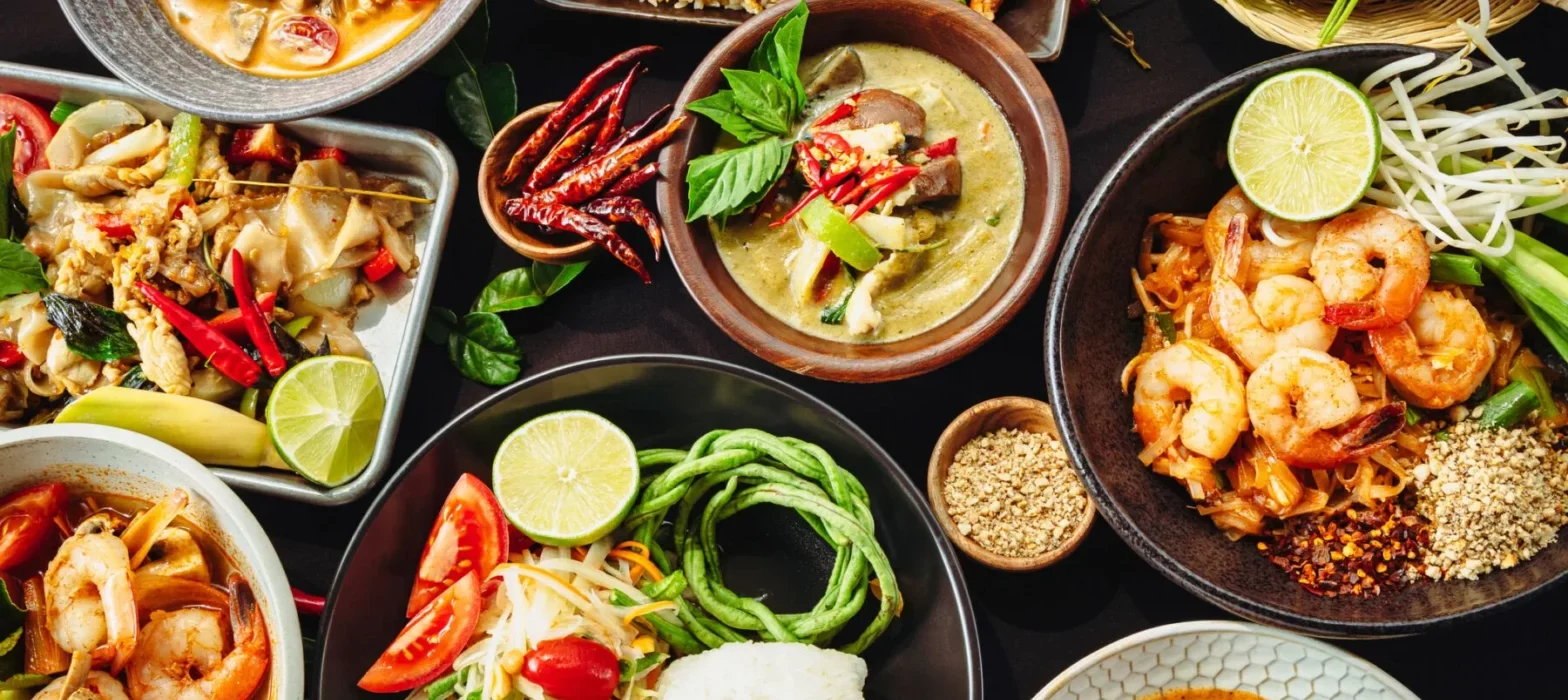
Try explaining Thai food to someone who has never encountered it. Words like nam prik, khanom, or the expression sabai sabai may sound simple, but they carry deep cultural meanings that English can’t easily replicate. When translators encounter these terms, they face a unique challenge: Thai cuisine isn’t just about flavors—it’s about worldview, identity, and emotion. Thai food culture blends influences from Buddhism, royal traditions, regional histories, and a philosophy of balance. Translating it into English demands more than vocabulary swaps.
Thai to English translation and localization become especially complex when dealing with food, because culinary language in Thailand encodes lifestyle, spirituality, and relationships. Words that describe dishes often reflect preparation methods, eating rituals, or emotional states. Direct translation risks stripping dishes of cultural soul. This article explores why certain Thai culinary terms defy English labels, what makes localization challenging, and how food becomes a cultural ambassador. By the end, you’ll understand why Thai cuisine isn’t merely eaten—it’s lived, narrated, and emotionally shared.
Understanding Thai Culinary Language
More Than Just Ingredients
Thai food words often encapsulate techniques, textures, and cultural beliefs. For instance, nam prik isn’t simply “chili paste”—it’s a category of dips that join rice, vegetables, and community. Reducing it to “sauce” ignores rituals around sharing meals.
Regional Identity in Vocabulary
Food terms reveal where someone comes from. Khao soi signals the north, while nam prik kapi evokes coastal flavors. English lacks regional emotional connotations, making Thai to English localization tricky.
Why Thai Food Terms Resist English Labels
Nam Prik—Not Just a Dip
Nam prik includes various chili-based condiments served with fresh or boiled vegetables. In English, calling it “chili dip” misses the social context—nam prik is eaten communally, symbolizing warmth and hospitality. Translating it literally removes cultural flavor.
Khanom—Is It Dessert? Not Quite
Khanom is often mistranslated as “dessert,” but it includes snacks, sweets, and ceremonial treats. English separates savory snacks and sweets into categories, while Thai categorization blends them. Localization requires explanation, not substitution.
Sabai Sabai—More Than Relaxation
The phrase sabai sabai communicates comfort, ease, and emotional contentment. It’s not merely “relax”—it’s a cultural rhythm. English lacks a term with identical emotional layering.
Localization Challenges and Cultural Loss
Emotional Semantics Missing in English
Thai culinary terms evoke shared experiences. Words like sanuk (fun) and jai yen (cool heart) influence eating habits. Literal translation captures meaning but loses emotional resonance.
Culinary Rituals Embedded in Language
Food isn’t merely eaten—it’s prepared communally. Terms convey relationships: elders cook, children assist, and guests enjoy. English food vocabulary lacks this encoded hierarchy.
Food as Cultural Identity and Soft Power
Thai Cuisine in Global Markets
Thai restaurants abroad use original terms—pad Thai, som tam, nam prik—because translations fail. Authenticity becomes market value. Retaining Thai words shapes perception and elevates cultural identity.
Government Efforts to Globalize Cuisine
Thailand’s “Global Thai” initiative promotes cuisine worldwide, using food to project cultural influence. Terms remain in Thai to maintain brand identity.
Case Studies on Mistranslation
The “Chili Sauce” Mislabel
Some supermarkets label nam prik as “chili sauce,” misrepresenting the dipping ritual. Consumers assume it’s a condiment like ketchup, disconnecting the food from tradition.
Dessert Confusion with Khanom
Western cookbooks describe khanom as “Thai desserts,” narrowing its meaning and erasing ceremonial or savory contexts.
Localization Strategies That Work
Hybrid Translation and Vocabulary Retention
Rather than replacing words, translators pair terms with brief explanations. For example: nam prik—a chili-based dip eaten with rice and vegetables.
Cultural Narration Over Literal Conversion
Explaining food as part of Thai lifestyle—festivals, rituals, and family gatherings—helps English speakers grasp significance.
Conclusion
Thai culinary terms refuse to sit quietly inside English labels because they represent more than flavors—they carry cultural roots. Nam prik isn’t just a dip; it’s a shared ritual. Khanom isn’t dessert; it’s a spectrum of edible experiences tied to festivals, history, and devotion. The phrase sabai sabai isn’t simply about relaxation—it’s a way of being. When translated into English without cultural context, these rich ideas flatten into generic words, losing emotional nuance and identity.
Successful Thai to English translation and localization must respect meaning beyond the dictionary definition. Translators must act as cultural tour guides, offering explanations that invite curiosity rather than settle for imperfect equivalents. Thai cuisine thrives globally not because it’s exotic, but because it’s expressive. Translators aren’t just converting text—they’re preserving legacy. So next time you hear nam prik or sabai sabai, remember: the taste isn’t merely in the mouth; it’s in the story.
FAQs
- Why can’t namprik be called chili sauce?
Because it represents a shared eating ritual, not just a condiment. - Does khanom always mean sweet desserts?
No. It includes snacks, ceremonial treats, and savory items. - Why keep Thai food terms untranslated?
They carry cultural meaning that English terms can’t replicate. - Can sabai sabai be translated accurately?
Not fully. It’s an emotional state, not just the act of relaxing. - How does food become soft power?
It sparks curiosity and cultural appreciation abroad, strengthening identity.