

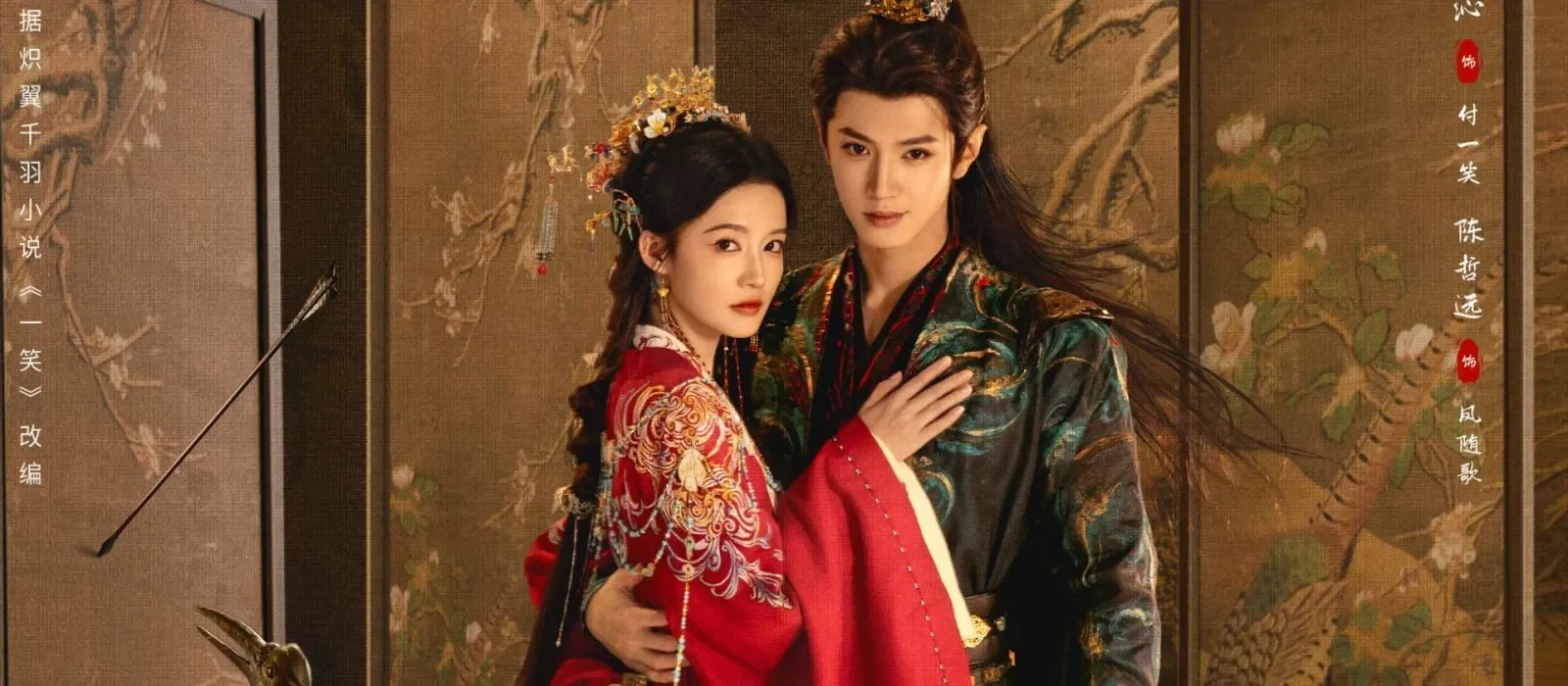
If you’ve ever watched a Chinese period drama with English subtitles and wondered why some words seem untranslated or oddly explained, you’ve stumbled into one of the thorniest challenges in Chinese to English localization. Historical Chinese terms don’t simply describe people, objects, or titles—they encode Confucian hierarchy, dynastic power structures, and philosophical thought. When Western audiences meet concepts like “皇上,” “江湖,” or “修仙,” simple English equivalents collapse under the weight of cultural meaning. Translating them is like stuffing an elephant into a shoebox—you can fit the shape, but you lose the soul.
As dramas like Nirvana in Fire, The Untamed, Story of Yanxi Palace, and Empresses in the Palace have gone global, streaming platforms face a daunting task: localize ancient worlds without turning them into fantasy clichés. This article reveals why literal translation fails, why context matters more than vocabulary, and how cultural logic shapes storytelling. If you love Chinese dramas or work in localization, prepare to see subtitles in a whole new light.
Why Chinese Historical Terms Don’t Behave in English
Chinese period culture is rooted in millennia of imperial governance, filial obligations, and spiritual cosmology. English lacks a shared cultural framework, so words that seem straightforward in Chinese carry interpretive overload. Localization teams must decide: simplify and risk distortion, or explain and risk interrupting immersion.
Honorifics That Carry Social Power
In English, “Your Majesty” or “Sir” are formal but generic. In Chinese dramas, titles reflect specific rank, lineage, and proximity to power:
| Chinese Term | Literal Meaning | Usual Subtitle | Lost Meaning |
| 皇上 | Emperor | Majesty | Divine mandate implied |
| 殿下 | Hall Below | Your Highness | Spatial hierarchy ignored |
| 小人 | Small person | This humble servant | Personal shame erased |
These aren’t just words—they are social scripts.
When “Jianghu” Isn’t Just a Place
“江湖” is often rendered as martial world or underworld, but neither works well. The term describes a liminal society operating outside imperial order—part utopia, part chaos, part morality test. To translate it literally is to amputate its narrative force.
Localization must transmit worldview, not geography.
The Impossible Translation of “修仙”
Western equivalents like cultivation or immortal training reduce “修仙” to a fitness routine. But the concept merges Daoist philosophy, metaphysics, medicine, and personal enlightenment. English lacks a worldview where physical mastery equals cosmic ascension, so every translation feels wrong.
Clothing as Social Code — Not Fashion
Chinese garments like hanfu, changshan, and ruqun encode identity, status, and virtue. Subtitling them as robe or dress dissolves centuries of semiotic meaning. Western fashion vocabulary is built on aesthetics; Chinese costume terminology is built on ethics and hierarchy.
Why Chinese Drama Dialogue Feels Formal in English
Chinese imperial speech draws from classical structures where tone equals morality. English speech patterns lack these linguistic expectations, so subtitles resort to archaic phrasing—“This servant dares not say”—creating an artificial Shakespearean flavor that feels foreign even when accurate.
Cultural Consequences of Mistranslation
A mistranslation in a corporate email may annoy someone. A mistranslation in a period drama rewrites history. For example, calling the emperor a “king” downgrades cosmic and political authority. Western monarchy lacks the metaphysical dimension embedded in Chinese rulership.
Translation can erase civilizations if done carelessly.
Case Study — The Untamed
This global hit illustrates localization tension. The English subtitles preserved terms like sect, cultivation, and core because substitutes failed to capture spiritual world-building. Fans embraced the unfamiliar terminology because coherent myth beats awkward equivalence.
Successful localization trusts curiosity, not simplification.
Subtitles vs. Dubbing — A Cultural Trade-Off
Dubbing often domesticates language, but domestication deletes cultural codes. Subtitles allow authenticity but overload readers with information. Western audiences used to brevity find Chinese dramatic syntax verbose—but deleting it distorts emotional nuance.
There’s no perfect solution. Only choices.
Conclusion
Chinese period dramas are not historical window dressing—they are cultural archives. Every term, title, and phrase is a narrative device loaded with meaning. Attempting a direct English equivalent reduces a multilayered idea into a flat label. That’s the core challenge of Chinese to English translation / localization in historical media: English inherits a worldview built on individualism, linear chronology, and limited honorifics, while Chinese culture embeds language in duty, cosmic order, and relational hierarchy. If translators aren’t careful, they don’t just change words—they rewrite the logic of entire civilizations. For Western viewers, embracing the unique language of Chinese dramas isn’t an inconvenience; it’s an invitation into a deeper world. So next time you see a term left untranslated, remember: sometimes the only faithful translation is letting the word breathe. Want a richer viewing experience? Don’t skip the subtitles—study them.
FAQs
- Why do Chinese dramas leave certain words untranslated?
Because English lacks equivalent cultural concepts, meaning is clearer when words remain intact. - Is dubbing worse than subtitling for localization?
Not inherently, but dubbing often sacrifices cultural nuance for fluency. - Why do Chinese honorifics matter so much?
They signal rank, obedience, and moral alignment—key elements in Confucian social order. - What’s the biggest localization mistake in period dramas?
Reducing imperial terminology to generic English royalty titles. - Can AI solve period drama translation issues?
Not yet. It lacks cultural reasoning required to interpret historical worldview.