

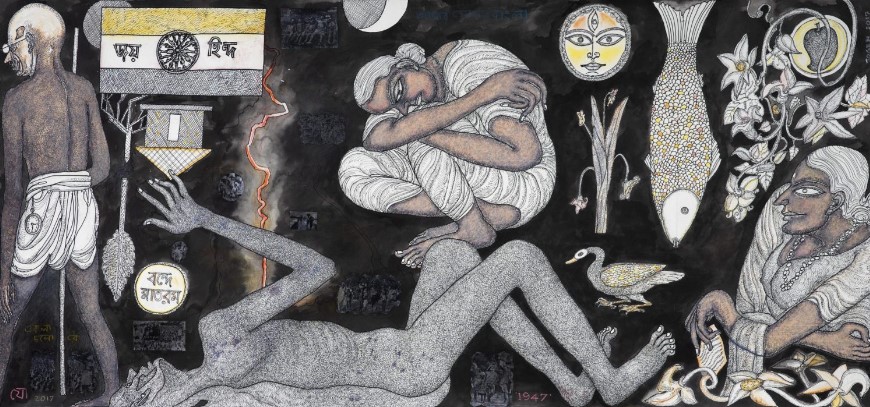
The 1947 Partition of India remains one of the most painful ruptures in South Asian history, and nowhere is its emotional magnitude more deeply felt than in Bengali literature. Writers such as Sunil Gangopadhyay, Narayan Sanyal, and Ritwik Ghatak shaped a narrative space where grief, displacement, and fractured identity live in raw linguistic detail. When these works cross linguistic borders through Bengali to English translation, the challenge becomes more than just word conversion — it’s about transporting trauma without diluting soul.
But here’s the real problem: trauma doesn’t translate easily. Bengali literature uses layered syntax, cultural idioms, and emotional metaphors that English cannot replicate directly without losing intensity. How do translators carry the trembling silences, the gendered sufferings, the smells of refugee camps, and the quiet rage against bureaucracy into English? This article explores the delicate artistry behind such translations, the risks of cultural flattening, and the strategies translation experts use to ensure voice, memory, and pain survive the linguistic leap.
- Why Partition Literature Is Difficult to Translate
Partition narratives are not merely historical records — they’re emotional landscapes. Bengali authors embed trauma into rhythm, pauses, and metaphoric density. English, by comparison, is far more direct, often losing subtlety in its pursuit of clarity.
- The Cultural Weight of Silence in Bengali Prose
In Bengali writing, silence is a narrative tool. A character omits a sentence, and the reader fills it with loss. English readers are conditioned for explicit reasoning, making this silence harder to replicate without explanatory intrusion.
- Emotional Syntax: The Bengali Sentence That Breathes
Bengali allows elongated sentences where emotional states stretch across clauses. Translators must decide whether to preserve length — risking readability — or break it, potentially fracturing emotional flow.
- Metaphorical Trauma: When Geography and Grief Intertwine
Partition literature often personifies borders as living wounds. Bengali metaphors like desh bhaanga mon (a heart shattered like a nation) lose nuance when rendered literally in English, requiring interpretive creativity.
- Preserving Voice: Authenticity vs Accessibility
Translators must choose between strict fidelity to Bengali expressions and creating English versions that resonate. The wrong choice can sterilize emotion or distort cultural identity.
- Translating Gendered Grief
Women experienced displacement differently — often conveyed through domestic metaphors in Bengali texts. English lacks analogous emotional registers, making localization a negotiation between literal phrasing and conceptual meaning.
- The Sound of Pain: Bengali Oral Rhythms in Print
Many Partition stories mimic the cadence of spoken Bengali, especially in dialect-heavy refugee narratives. English does not replicate musical rhythm naturally, making tonal preservation a conscious structural task.
- Historical Specificity: When Context Dies in Translation
Terms like bhodrolok, addaa, or toshriyo carry cultural functions beyond definition. Removing them to simplify text erases social hierarchies essential to understanding trauma.
- Memory as a Character
Bengali narratives treat memory as an active presence — not a passive recollection. English grammar favors temporal separation, making memory less embodied unless the translator consciously preserves fluidity.
- Case Study: Translating Sunil Gangopadhyay’s Refugee Voices
Gangopadhyay uses child narrators to describe displacement through fragmented perception. Translators must avoid over-clarifying these passages, maintaining the child’s confusion to preserve emotional authenticity.
- Political Vocabulary and Emotional Charge
Words like desh, shoronarthi, and bidroho are emotionally charged. Translating them into neutral English equivalents risks stripping away political pain embedded in the very syntax.
- Trauma Localization Strategies That Work
Successful translators employ:
- Contextual annotation without overwhelming footnotes
- Cultural retention for untranslatable terms
- Emotional pacing mirroring Bengali narrative breath
- Selective domestication only where comprehension demands it
These strategies create translations that are neither exotic caricatures nor Westernized replicas.
Conclusion
Translating Bengali Partition literature into English is more than a linguistic activity — it’s a cultural responsibility. The trauma embedded in Bengali narratives lives in metaphor, silence, and emotional pacing. Strip these away, and what remains is a skeleton of history, not its lived experience. Through thoughtful localization, translators preserve voice, agency, and memory, ensuring that English readers do not merely observe trauma but feel its lingering pulse.
As more global audiences turn toward South Asian history, preserving authenticity while making stories accessible becomes essential. If you’re a translator, student, or literature enthusiast, engage with Bengali texts not as puzzles to decode, but as emotional legacies to carry forward. The task isn’t to rewrite history — it’s to let it breathe through another language without losing the heartbeat that shaped it.
FAQs
- Why is Bengali Partition literature difficult to translate?
Because its emotional depth relies on cultural idioms, silence, and metaphor that English lacks. - What is the biggest risk in translating trauma literature?
Losing emotional authenticity by oversimplifying culturally embedded expressions. - Can silence be translated?
Not directly — translators use structure, pacing, and tone to imply emotional absence. - Are all Bengali words untranslatable?
No, but some carry cultural baggage that makes direct English equivalents insufficient. - Why does voice matter in literature translation?
Voice shapes how readers experience trauma; without it, the narrative loses identity.