

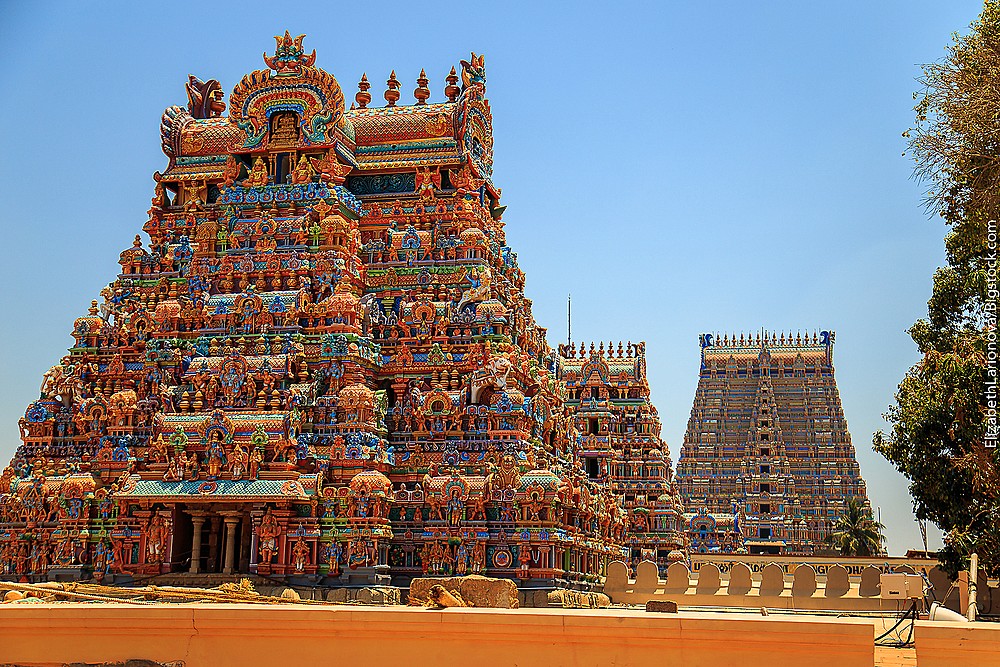
Step into a Hindu temple in Tamil Nadu, and language ceases to be a mere communication system—it becomes an atmosphere. Words echo through stone corridors, carried by chanting priests, burning incense, temple bells, and generations of worshippers. Terms like abhishekam, prasadam, archanai, deepam, and gopuram may look simple on paper, but each embodies centuries of ritual philosophy, emotional resonance, and metaphysical worldview. Translating them into English isn’t a matter of picking the closest dictionary match—it’s a delicate act of cultural negotiation.
The challenge lies in the fact that English evolved within a Judeo-Christian, secular, and often rationalist linguistic environment, while Tamil religious vocabulary is born of temple-based cosmology, lived devotion, and sensory worship traditions. When Tamil to English translation / localization tries to compress sacred, multisensory rituals into English words like “worship,” “offering,” or “tower,” something profound gets lost—not just meaning, but experience.
This article unpacks why Tamil ritual vocabulary resists English translation, examines the theological and cultural weight behind these terms, and reveals strategies translators use to preserve sacred meaning without flattening nuance or spirituality.
Why Tamil Temple Ritual Terms Resist English Equivalents
They Are Not Words—They Are Experiences
Tamil ritual vocabulary isn’t linguistic decoration. Each term carries:
- Emotional memory
- Procedural steps
- Mythological significance
- Sensory elements (sound, smell, movement)
English struggles because it labels; Tamil invokes.
English Is a Secular Lens
English tends to describe actions—Tamil describes relationships between humans, gods, and cosmic order. Ritual language collapses under secular reduction.
Embedded Theology
Words like abhishekam encode belief in divine presence, reciprocity, and symbolic cleansing. English cannot carry metaphysical assumption by default.
Core Vocabulary That Defies Literal Translation
Abhishekam
- Common English translation: Ritual bathing of a deity
- What’s lost:
- Cosmic renewal
- Devotee’s emotional surrender
- Symbolic purification of consciousness
Abhishekam is an offering of liquids—milk, honey, ghee—not a “bath.” It recharges creation.
Archanai
- Not: chanting prayers
- Is: personalized invocation of the deity using the devotee’s name
It establishes relational intimacy, which English lacks vocabulary to express.
Deepam
- Not: lamp
- Is: illumination of the inner self
In Tamil thought, light isn’t decor—it dissolves ignorance.
Prasadam
- Not: holy food
- Is: divine grace made edible
English misses metaphysical transformation.
Gopuram
- Not: temple tower
- Is: symbolic axis connecting earthly life to cosmic consciousness
English reduces cosmic architecture to real estate terminology.
Why Literal Translation Fails
Meaning Compresses, Devotion Evaporates
Literal English often strips emotional, aesthetic, and spiritual dimensions from ritual acts.
Western Religious Vocabulary Distorts Context
Terms like:
- Mass
- Eucharist
- Saint
carry Christian assumptions and cannot anchor Hindu cosmology.
Loss of Sensory Intent
Temple rituals engage:
- Drums
- Mantras
- Flowers
- Flames
English abstracts; Tamil immerses.
Ritual Translation Requires Cultural Mediation
Translators Are Custodians, Not Converters
Their task is to preserve devotion, not replace it with English comfort terms.
Ritual Vocabulary Is Hierarchical
Certain terms belong only to priests; others to devotees. English lacks social ritual strata.
Proven Strategies to Retain Sacred Meaning
Strategy #1 — Preserve Tamil Terms
Global examples already accepted:
- Yoga
- Guru
- Karma
Ritual terms can follow the same path.
Strategy #2 — Layered Explanation
Translate structurally, interpret spiritually:
Prasadam — a divine offering consumed as grace
Strategy #3 — Context Over Equivalence
Place meaning inside ritual scenes rather than dictionary boxes.
Strategy #4 — Avoid Religious Cross-Mapping
Borrowing Western terms imposes alien theology on Hindu practice.
Strategy #5 — Sensory Localization
Include sensory cues so English readers feel the ritual, not just understand it.
Conclusion
Tamil temple vocabulary isn’t merely descriptive—it is devotional technology. Each word is a portal into Tamil cosmology, aligning humans, gods, and universe through sound, gesture, and memory. When these terms are squeezed into English equivalents, the divine dimension shrinks, and ritual becomes an instruction manual. Effective localization does not seek convenience; it safeguards sacred architecture. The goal is not to replace Tamil—it’s to invite English speakers into a world where meaning is embodied, not explained. The best translators are not linguists—they are cultural interpreters who protect what language alone cannot convey.
To preserve Tamil ritual wisdom for future generations and global audiences, we must stop trying to domesticate sacred vocabulary for English comfort. Let the Tamil terms breathe—and teach English speakers to follow.
FAQs
Why can’t Tamil ritual terms be directly mapped to English?
They encode theology, symbolism, and sensory experience.
Should Tamil ritual terms be left untranslated?
Yes, with contextual explanation rather than replacement.
Why does English distort Hindu concepts?
It carries secular or Christian assumptions that reshape meaning.
Is literal translation enough for temple vocabulary?
No. It reduces devotion to procedure.
What makes Tamil ritual language unique?
It fuses emotion, myth, cosmic function, and embodied practice.